Religion Archives

Why Sex & Nudity is Down in Movies

This is the title of a post by Phil Cooke on his blog "The Change Revolution".  Phil is a Christian media consultant (that is, a consultant to Christian media) and has had some big name clientsHis bio is impressive.

But I think he’s not giving churches and other Christian organizations enough credit.  As to why the changes in movies are happening, why the reduction in sex and nudity, this is his answer:

Wal-Mart.

That’s right. In 2007, the major Hollywood studios made $17.9 billion in DVD sales. The catch? $4 billion (nearly 25%) was made from selling to Wal-Mart, the largest retailer in the world. But Wal-Mart actually has a policy that forces any movie with high sexuality and nudity away from the areas of highest visibility in their stores. They take those DVD’s and put them in an "adult" section that’s much harder for customers to see.

Why do they do it? They don’t want to offend moms. They know mothers are there to get family oriented DVD’s for their kids, and they represent a huge market for Wal-Mart.

OK, fair enough.  And here’s what he says isn’t working.

Although it might be hard to believe, sexuality and nudity is actually going down in movies today. And a number of Christian organizations are taking the credit. Some raise money based on telling the public they work in Hollywood "consulting" the studios, and others say they boycott or apply pressure from the outside. I don’t need to mention them, but they jump to the forefront when statistics indicate that sexuality in movies have dropped over the last number of years, and are the first in line to take credit. But the truth is, that’s bunk.

His conclusion:

Is it religious ministry organizations making the difference? Nope. Studios are discovering that it’s simply good business.

I’m not sure that the conclusion necessarily follows. He zeroes in on Moms making good choices, but if we zoom out just a tad, isn’t it very likely that many of those moms are actively participating in a boycott of some sort?  Isn’t it at least possible that knowledge of certain religious organizations’ views influence their choices? 

And what of Wal-Mart itself?  The Walton family has a background in the Presbyterian Church USA and have given millions to that church.  I find it highly likely that their decisions for the stores is influenced by their church and other religious ministries.

Are bees responsible for the production of fruit on trees?  Nope.  Each individual bee is just hungry.  OK, not the best analogy, but hopefully it serves to show that if you look too closely, you can miss a much larger picture.  I’m surprised that a guy like Cooke can miss something like this.  Perhaps the influence of religious organizations isn’t as big as those organizations themselves think.  But Cooke’s analysis by no means proves they have no influence.

Salt and light work.

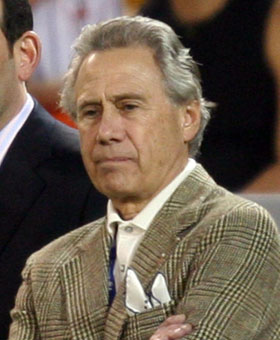
50 leaders of the evangelical generation: #44 Philip Anschutz. Media mogul

 [I am working on a project that may become a book on the most influential evangelicals leaders of our generation, since 1976, and the impact they’ve had on the church and their times. I will introduce them briefly on this blog from time to time. Who should be on this list?]

#44. Philip AnschutzMedia mogul  b.1939

 The most influential and effective evangelical Christian in Hollywood (he actually lives in Colorado) is zealously private and one of the richest men in the world. Oil magnate and multi-faceted entrepreneur Philip Anschutz has done three interviews in the last four decades and his company releases virtually no information on sales or strategy related to his relatively recent foray into media.

Almost a decade ago, Anschutz decided to do something about the moral decline of mainstream movies. He now owns two production companies—the family-friendly Walden Media and the more broadly focused Bristol Bay Productions.

“My wife and I now have a number of grandchildren who are growing up surrounded by products of this culture,” Anschutz said in 2004. “So four or five years ago I decided to stop cursing the darkness.”[1]  He added: “Hollywood as an industry can at times be insular and doesn’t at times understand the market very well. I saw a chance with this move to attempt some small improvement in the culture.”[2]

The companies’ creative teams have produced films as Amazing Grace, Charlotte’s Web, Bridge to Terabithia, Ray, and, most prominently, The Lion, The Witch, and The Wardrobe and Prince Caspian, two of seven planned movies based on C. S. Lewis’s Chronicles of Narnia. Walden is partnering with 20th Century Fox to produce The Screwtape Letters, based on the novel by Lewis, due for a 2010 release. Fox is also a partner for the third Narnia film, The Voyage of the Dawn Treader .[3]

Recently, Anschutz has provided the funding for television advertisements, billboards, and Regal Cinemas ads for his “For a Better Life” campaign. The campaign, while not explicitly Christian, promotes “faith” and “integrity,” using dramatic vignettes, and characters such as Shrek and Kermit the Frog.[4]

In addition to the film production companies and Regal theaters, Anschutz owns Qwest Communications, the premier provider of high-speed Internet, home phone and cell phones–and some 100 other businesses. Among them: railroads; oil companies; cattle ranching; wind farms; national park concessions; professional hockey [LA Kings], basketball [owns stakes in the LA Lakers and the Sacramento Kings] and soccer teams [co-founded Major League Soccer and owns multiple teams, including the LA Galaxy, Chicago Fire, Houston Dynamo, San Jose Earthquakes, New York / New Jersey Metro Stars, and the Kansas City Wizards]; the Staples Center and Kodak Theater in Los Angeles; the 02 Dome in London. He recently purchased the conservative journal, The Weekly Standard.[5]

One Narnia fan wrote:

“At the start of The Lion, the Witch, and the Wardrobe, we find C. S. Lewis’s mythical world of talking animals, satyrs, fauns, centaurs, and dwarves trapped in the Hundred Year Winter – a time where evil reigns and creativity has given way to cruelty. And so it remains until a mighty lion messiah roars onto the scene to awaken warmth and hope. Philip Anschutz is no messiah, but he has made it his ambition to lead Hollywood out of a cynical and amoral ice age. Will this self-made Colorado billionaire become modern entertainment’s rescuer, a lion-hearted savior of American film?” [6]


[1] http://www.beliefnet.com/Faiths/Christianity/2008/09/The-12-Most-Powerful-Christians-in-Hollywood.aspx?p=11

[2] http://old.mediatransparency.org/story.php?storyID=218

[3] http://www.christianitytoday.com/ct/2008/may/24.46.html

[4] http://old.mediatransparency.org/story.php?storyID=218

[5] http://www.forbes.com/2009/06/28/anschutz-weekly-standard-business-media-examiner.html?feed=rss_business_media

[6] http://www.narniafans.com/archives/660

Sophmoric Homiletics: Tolerance (pre-draft)

When I asked Father Andrew (the priest of my parish) for suggestions for a homily or short talk on the New Testament he suggested talk on the theme of tolerance, which was a theme for articles in this months parish newsletter. For myself the following came to mind. (John 8)

Early in the morning he came again to the temple. All the people came to him, and he sat down and taught them. The scribes and the Pharisees brought a woman who had been caught in adultery, and placing her in the midst they said to him, “Teacher, this woman has been caught in the act of adultery. Now in the Law Moses commanded us to stone such women. So what do you say?”  This they said to test him, that they might have some charge to bring against him. Jesus bent down and wrote with his finger on the ground.  And as they continued to ask him, he stood up and said to them, “Let him who is without sin among you be the first to throw a stone at her.” And once more he bent down and wrote on the ground.  But when they heard it, they went away one by one, beginning with the older ones, and Jesus was left alone with the woman standing before him. Jesus stood up and said to her, “Woman, where are they? Has no one condemned you?” She said, “No one, Lord.” And Jesus said, “Neither do I condemn you; go, and from now on sin no more.”

A suggestion at Evangel as well was from Romans 14:

Who are you to pass judgment on the servant of another? It is before his own master that he stands or falls. And he will be upheld, for the Lord is able to make him stand.One person esteems one day as better than another, while another esteems all days alike. Each one should be fully convinced in his own mind. The one who observes the day, observes it in honor of the Lord. The one who eats, eats in honor of the Lord, since she gives thanks to God, while the one who abstains, abstains in honor of the Lord and gives thanks to God. For none of us lives to himself, and none of us dies to himself. For if we live, we live to the Lord, and if we die, we die to the Lord. So then, whether we live or whether we die, we are the Lord’s. For to this end Christ died and lived again, that he might be Lord both of the dead and of the living.

Others suggested Revelations 2, Romans 12: 17-21, and Mark 2:15-17 as well a general reference to Jesus commandment that we love each other.

As is often the case, I before I begin a draft … out comes the dread bullet list. Read the rest of this entry

50 leaders of the evangelical generation: #31 Beverly LaHaye. Concerned woman

[I am working on a project that may become a book on the most influential evangelicals leaders of our generation, since 1976, and the impact they’ve had on the church and their times. I will introduce them briefly on this blog from time to time. Who should be on this list?]

#31  J. Beverly LaHaye. Concerned woman  b.1929 

It might be said that Beverly LaHaye was present at the birth of the religious right, starting Concerned Women for America in 1979, the same year as Jerry Falwell launched the Moral Majority. She has been one of many people who have made it their vocation to provide a conservative Christian perspective on the issues of each day and to lobby for policies acceptable to Christians of the political right. 

 Although she began CWA to counter the National Organization for Women, the organization has become one of several Christian conservative groups that are, in many ways, interchangeable in their activities to counter abortion, gay rights, and liberal thought and action. In that sense, LaHaye represents many conservative activists like her, such as Gary Bauer, Tony Perkins, Donald Wildmon, and Janet Parshall. She is the senior member of this group. 

 LaHaye was one of few women to emerge as public figures in the evangelical movement in this generation, although her prominence may be seen as a half-step in this regard because she emerged as part of a tandem with her husband Tim LaHaye, right-wing activist, then best-selling co-author of the phenomenally best-selling Left Behind book series.

LaHaye started the Beverly LaHaye Live daily radio program in 1988 “to influence women and men to take political action, build strong families and take leadership in their communities.” The program was awarded the National Religious Broadcasters’ “Talk Show of the Year Award” in 1993 and was on the ari until 2004.

”Christianity Today wrote in 1997: “LaHaye spent the early years of her 50-year marriage raising four children and supporting her husband. While very much a traditional woman in one sense, Beverly LaHaye now heads the largest politically active women’s organization in the country. LaHaye said her radio show ‘combats the fiery darts of immorality, the entertainment industry, and school curriculums.’”[1]

LaHaye’s legacy, like those who have shared the same mission and methodology, is hotly debated, not only on ideological grounds, but also in terms of the effectiveness of the frontal attacks on dreadful policies such as legalized abortion, and the ensuing harsh and hateful image that has been successfully cast by their opponents of these conservative Christians. Although one can question the efficacy of pastors and Christian leaders who turned from other areas of work to the political fight, there clearly needed to be a group of professionals who stood up for Christian values in the public realm, and did so as their day job. Beverly LaHaye took up the fight as a second career, after raising her kids, and she has spent her later years as one of the early and few women in the indelicate role as an evangelical storm trooper in the Washington.

LaHaye has been frequently recognized for her leadership in the political and Christian community. In 1984, she was named “Christian Woman of the Year.” In 1988, she was named “Church Woman of the Year.” In 1991, she received the Southern Baptist Convention’s “Religious Freedom Award.” The Values Action Team of the U.S. House of Representatives honored her in 1994 for her service to the country. In 1992, Liberty University awarded her an Honorary Doctorate of Humanities for her lifetime achievement in protecting the rights of the family. LaHaye currently serves on the boards of Liberty University, Childcare International, and the International Right to Life Federation. She and Tim LaHaye have four adult children, nine grandchildren and seven great grandchildren. They live in Southern California.


[1] http://www.christianitytoday.com/ct/1997/march3/7t3066.html?start=2

Bleg: Some N.T. Passsages

One week from Saturday, I’m giving an oral final/homily to a (late vocations) N.T. class that I’m taking. I had a suggestion to do my homily concentrating on the topic of tolerance. Right now I’m thinking of starting (and wrapping up?) with a look at the section in John in which Jesus confronts the crowd and those who would stone the prostitute.

What I’m asking for here is other N.T. verses and sections in which the theme of tolerance is significant.

Thanks much.

50 leaders of the evangelical generation: #38 Doug Coe. Stealth networker.

[I am working on a project that may become a book on the most influential evangelicals leaders of our generation, since 1976, and the impact they’ve had on the church and their times. I will introduce them briefly on this blog from time to time. Who should be on this list?]

#38  Doug Coe. Stealth Networker  b.1928 

Doug Coe, center, introduces the president to a friend


 It is hilarious to read about attempts to weave a master plan by Christians to take over the government or create a shadow group to corner some part of the culture. It is clear that anyone who attempts this has very little experience within the Christian sub-culture. Religious groups have a difficult time agreeing on much of anything, and there are many jokes about how “if you have three Baptists (or fill in your denomination) in a room, there are four opinions.” 

Yet many have tried to find some nefarious motivation in the work of Doug Coe and his network, known by most as The Fellowship. Coe is perhaps the most effective networker in the evangelical world and he is likely the most invisible leader of a major Christian outreach. It is the secretive and silent nature of Coe and The Fellowship that has made them the target for conspiracy theories. Coe is reluctant to do public speaking, and he routinely denies requests for interviews and speeches to large audiences. Muckraking journalists have attempted to fill in the blanks left by Coe’s silence.

 Many praise the low-visibility approach. “It is a virtue to try to be anonymous in a town where self-promotion is so often the modus operandi of many who come to work among the powerful,” said Michael Cromartie, vice president of the Ethics and Public Policy Center.[1]

 The Fellowship’s most visible program (although you’ll never see Coe on the stage or hear the organization make a pitch) is the annual National Prayer Breakfast the first week in February in Washington, D.C. This event, which the President always attends, is officially conducted by the House and Senate prayer groups; but The Fellowship is the group that makes it happen each year. 

 Although Coe is revered by evangelicals for creating places and relationships around Christian faith, The Fellowship is not a place of theological purity and the spiritual content is frequently superficial. Theological specificity is sacrificed in the interest of pulling leaders in the U.S. and around the world into relationships based on Christianity.    

 Nonetheless, Coe has had an enormous impact on evangelical outreach among the most powerful people in the world, and on maintaining at least the vestiges of Christian protocol in the Nation’s Capital through the Prayer Breakfast and related groups. In a survey of 300 top evangelical politicians, one third told author D. Michael Lindsay that the Fellowship was one of the most influential Christian groups in Washington, more than any other group.  According to Lindsay, “there is no other organization like the Fellowship, especially among religious groups, in terms of its access or clout among the country’s leadership.”[2]

The extent of Coe’s influence in American politics is a subject of debate. Important figures have acknowledged his role on the national and international stage. Speaking at the 1990 National Prayer Breakfast, President George H.W. Bush praised Coe for his “quiet diplomacy, I wouldn’t say secret diplomacy”.[3] Coe was a behind-the-scenes spiritual mentor at the Camp David Accords in 1978, working with President Jimmy Carter to issue a worldwide call to prayer with Israeli Prime Minister Menachem Begin and Egyptian President Anwar Sadat.

One of Coe’s most publicized relationships is with Chuck Colson, founder of Prison Fellowship Ministries. Colson has described the key role the Fellowship and Doug Coe played in his conversion in his 1976 book Born Again (that’s why the word Fellowship is in the Prison Fellowship name).  Colson praises Coe’s work in his life as a young Christian, but he has been quietly critical of the lack of orthodoxy in the teaching and discipling work of The Fellowship. Colson has said he also has concerns about politicians using Fellowship events and relationships as a replacement for church. “A leading figure ought to belong to a church,” Colson said.[4]

However, despite significant efforts, no one has been able to find anything but the highest motives in Coe’s work. As former U.S. Senate Chaplain Richard Halverson put it in the eighties, Coe “became the godfather; but for good, not for bad.  He became the mentor of dozens of seekers of Christ who came, like Nicodemas came to Jesus quietly by night, to ask Faith questions.” [5]

A native of Oregon and a product of Young Life and The Navigators, Doug Coe was schooled in Bible memorization and study, mentoring, and discipling by Lorne Sanny and Jim Rayburn. He was also mentored for a time by a young Billy Graham.  In 1958, Coe was employed by Abraham Vereide at the International Christian Leadership, the parent of what has become known as The Fellowship.


[1] http://www.worldmag.com/articles/15778


[2] Lindsay, D. Michael. Evangelicals in the Halls of Power.

[3] Sharlet, Jeff (2008). The Family: Secret Fundamentalism at the Heart of American Power. Harper-Collins.

[4] http://www.worldmag.com/articles/15778

[5] http://www.worldmag.com/articles/15778

Stereotypes Last Only As Long As You Let Them

This woman and Penn Jillette might have a lot in common to talk about regarding how the Religious Right have been portrayed in our culture.

[Eve] Tushnet entered Yale in 1996 a happy lesbian, out since age 13 or 14 (she can’t quite remember). Her father, a nonobservant Jew, and her mother, a Unitarian, both belonged to progressive traditions, tolerant of her sexuality.

When, as a freshman, she attended a meeting of the Party of the Right, a conservative group affiliated with the Yale Political Union, it was “specifically to laugh at them, to see the zoo animals,” she says.

“But I was really impressed, not only by the weird arguments but the degree to which it was clear that the people making them lived as if what they were saying had actual consequences for their lives, that had required them to make sacrifices.”

In Ms. Tushnet’s time, as in mine — I was four years ahead of her at Yale — the Party of the Right had a benignantly cultish quality. “Have you read ‘The Secret History?’ ” she asks, referring to Donna Tartt’s 1992 novel about a secretive student clique obsessed with Greek literature. “It was like that.”

But she listened to them, sincerely, and came out with a far, far different view of them than the culture had led her to believe.

But she found the Party of the Right students compassionate, intellectual and not terribly exercised about her homosexuality. She was drawn to the Catholics among them, who corrected her misimpression that the existence of sin “means you are bad.” It means “precisely the opposite,” they taught her. “It means you have a chance to come back and repent and be saved,” she says. She began reading books like St. Anselm’s “Why God Became Man.” She began attending church. Her sophomore year, she was baptized.

“By the time it was real enough to be threatening,” she says of her conversion, “things had gone too far. I didn’t see it coming.”

So now she’s a fervent Catholic and against same-sex marriage, but isn’t trying to change her religion to fit her notions of right and wrong.  She really believes in it, and understands what that means for her life.

As the hundred or so daily readers of eve-tushnet.blogspot.com, and a larger audience for her magazine writing, know by now, Ms. Tushnet can seem a paradox: fervently Catholic, proudly gay, happily celibate. She does not see herself as disordered; she does not struggle to be straight, but she insists that her religion forbids her a sex life.

“The sacrifices you want to make aren’t always the only sacrifices God wants,” Ms. Tushnet wrote in a 2007 essay for Commonweal. While gay sex should not be criminalized, she said, gay men and lesbians should abstain. They might instead have passionate friendships, or sublimate their urges into other pursuits. “It turns out I happen to be very good at sublimating,” she says, while acknowledging that that is a lot to ask of others.

Marriage should be reserved for heterosexuals, whose “relationships can be either uniquely dangerous or uniquely fruitful,” she explained in an e-mail message. “Thus it makes sense to have an institution dedicated to structuring and channeling them.”

She has her problems with the ex-gay movement (see here for her very thoughtful NRO piece on the topic), but does understand what the Church teaches on the subject and, rather than practice the a la carte version of Christianity some do, she’s taken Jesus’ advice to count the cost, and decided to apply the teachings rather than ignore that which she holds true.  That’s dedication and commitment.

But she got there by actually listening and giving a fair hearing to what others considered religious nuts.  Don’t believe the press.  Well, in general, but specifically about the Religious Right(tm).  Find out for yourself.

50 leaders of the evangelical generation: #20 Al Mohler. Denominational whip.

 [I am working on a project that may become a book on the most influential evangelicals leaders of our generation, since 1976, and the impact they’ve had on the church and their times. I will introduce them briefly on this blog from time to time. Who should be on this list?]

#20 R. Albert Mohler, Jr. Denominational whip  b.1959 

Because it is the largest Protestant denomination in the world, actions by the Southern Baptist Convention (SBC) attract significant attention, and few people interested in matters of faith are neutral in their opinions of the SBC. With the current position of the SBC as a solidly conservative bastion within evangelicalism, it requires a 20-year journey to the early 1990’s to observe an interdenominational fight that almost thoroughly ousted leaders of the SBC who had begun to toy with more liberal theological positions.  Through the election of conservatives at the national level, Southern Baptists initiated a process to return the denomination to traditional teachings

 In that war for orthodoxy, R. Albert Mohler became a five-star general, leading first a cleansing of Southern Baptist Theological Seminary in Louisville, where he became president in 1993, and then joining like-minded conservatives to realign the denomination as a whole. Paige Patterson, former SBC president and also a seminary president, said that Mohler’s presidency at Southern—the denomination’s flagship institution—corrected theological leanings in the SBC. “Al Mohler has the brains of Erasmus and the courage of Luther,” Patterson said at the time.

Shortly after his term as president began, Mohler drafted a policy (which was ratified by the trustees) that the Seminary would only hire professors who agreed to sign an Abstract of (theological) Principles (many professors had moved away from the tradition of Biblical inerrancy). Those who refused to sign were dismissed or resigned, which was approximately 75 percent of the faculty. During the two-year period after this policy was implemented, more than 50 percent of the student body transferred out of Southern Seminary to other academic institutions.

The fall-off in enrollment was short-lived and by 2006 Southern Seminary saw the largest enrollment in its history, and the institution is now one of the most endowed and largest seminaries in the world.

Mohler was also instrumental in the mid-1990s restructuring of the Southern Baptist Convention, which saw an increase in the influence of conservatives. After the restructuring had occurred, Mohler and others sought to enforce these doctrinal changes through the adoption of a revised Baptist Faith and Message in 2000.

Today, Mohler– who Time magazine called the “reigning intellectual of the evangelical movement in the U.S.”.[1]—has the most powerful religious blog in the country, and he has a popular daily radio program syndicated by Salem Radio Network.

Mohler is in the middle of what may be his next theological battle: Southern seminary has become a Reformed hotbed, part of a trend in many of the leading evangelical seminaries. This surge of Reformed theology has divided Southern Baptist churches and raised questions about the doctrinal direction of the denomination. A LifeWay Research study released in 2009 reported about 10 percent of Southern Baptist pastors identified themselves as Calvinist, but that number is increasing. Twenty-nine percent of recent SBC seminary graduates espoused Calvinist doctrine.[2]

 Mohler writes, “Calvinism was the mainstream tradition in the Southern Baptist Convention until the turn of the century. The rise of modern notions of individual liberty and the general spirit of the age have led to an accommodation of historic doctrines in some circles.”[3]

With the majority of Southern Baptist pastors preaching Arminianism and the seminaries becoming more Reformed, it’s too early to tell who is going to prevail in this doctrinal split. But if Southern Baptists allowed any kind of gambling, the good money would be on Al Mohler’s team. 

Al Mohler  is a native of Lakeland, Florida. He attended received a B. A. from Samford University, a Baptist college in Birmingham, Alabama. His graduate degrees, a Master of Divinity and Ph.D. in “Systematic and Historical Theology,” were conferred by Southern Seminary.

In addition to his position as president, Mohler also serves as Professor of Christian Theology at Southern. His writings have been published throughout the United States and Europe. He has contributed to several books including Hell Under Fire: Modern Scholarship Reinvents Eternal Punishment, Here We Stand: A Call From Confessing Evangelicals and The Coming Evangelical Crisis. He served as General Editor of The Gods of the Age or the God of the Ages: Essays by Carl F. H. Henry and served from 1985 to 1993 as Associate Editor of Preaching, a journal for evangelical preachers. He currently serves as Editor-in-Chief of The Southern Baptist Journal of Theology.


[1][1] http://www.time.com/time/world/article/0,8599,443800,00.html


 [2] http://www.bpnews.net/bpnews.asp?id=27181&ref=BPNews-RSSFeed0111

[3] http://reformedbaptistfellowship.wordpress.com/2009/03/23/southern-baptists-and-calvinists-a-response-to-elmer-towns-part-1/

50 leaders of the evangelical generation. #24 Brian McLaren. Nonconformist on the edge

[I am working on a project that may become a book on the most influential evangelicals leaders of our generation, since 1976, and the impact they’ve had on the church and their times. I will introduce them briefly on this blog from time to time. Who should be on this list?]

# 24.  Brian McLaren, Nonconformist on the Edge  b. 1956

Last year, one of the pastors at our conservative church handed me a list of must-read books, including more than one by Brian McLaren. Later, one of my Baptist acquaintances explained to me that McLaren was apostate because he thought you could be a Buddhist Christian or a Muslim Christian. That pretty well describes the range of opinion of McLaren among even the most orthodox, faithful evangelicals. McLaren was one of the early leaders of the emergent movement and its best known figure; his written and spoken words have come under scrutiny and criticism from figures both inside and out of the movement.

McLaren has great appeal among young people seeking spiritual answers but hesitant to jump into a traditional evangelical church, or buy into its political inclinations or its positions on social issues. His fearlessness to think out loud and his willingness to unhinge his theological wonderings from historic orthodoxy or modern accountability has made him not only controversial, but quite possibility so far outside of the evangelical mainstream that he may soon be considered something other than an evangelical believer. As one observer opined: “Brian McLaren has been on a heretical trajectory for quite some time.”

McLaren’s written and spoken words have come under scrutiny and subsequent criticism from figures both inside and out of the emerging church movement. Generally these criticisms claim that McLaren’s theology provides no basis for doctrine and that without any basis, doctrine is abandoned in favor of “generosity” and “conversation.” Conservatives in the emergent movement have joined mainstream evangelicals in protesting that McLaren’s philosophical posture has led him to entertain and even embrace un-orthodox or perhaps even apostate doctrinal positions. One leader of the emerging church movement, Mark Driscoll, has complained about McLaren’s calling God a “chick,” his advocacy of open theism, his downplaying of substitutionary atonement,  and his denial of hell. Reviewing McLaren book A New Kind of Christianity in 2010, Scot McKnight, a professor at North Park University and a former supporter of Emergent Village wrote:  

“I want to turn the following comment from McLaren back on him: “Sociologists sometimes say that groups can exist without a god, but no group can exist without a devil.” Brian’s devil is Western evangelicalism, which he caricatures often, and his poking is relentless enough to make me say that he needs to write a book that simply states in positive terms what he thinks without using evangelicalism as his foil.”

Most prominent evangelical leaders have criticized McLaren writings and positions. D.A. Carson, professor at Trinity Evangelical Divinity School, said of McLaren’s doctrinal views: “As kindly but as forcefully as I can, that to my mind, if words mean anything, McLaren has largely abandoned the gospel.”[1]

Some are harsher. One fundamentalist wrote: “McLaren rejects absolute truth, authority, theology, objectivity, certainty and clarity. He embraces relativism, inclusivism, deconstructionism, stories (to replace truth), creative interpretation of Scripture, neo-orthodoxy, and tolerance.”[2]

McLaren points to three differences in his approach to Christianity.”The first,” McLaren says, “is an understanding of the Gospel that centers on Jesus’ teaching of the Kingdom of God. I think just about everyone agrees the message Jesus proclaimed is the message that the Kingdom of God is at hand. I grew up in the church, and I never heard about that. When I heard about the Kingdom of God it was always interpreted as going to heaven after you die.”

Second: “An eschatology of engagement rather than abandonment. The idea that the world is going down the toilet and that we should just abandon and prepare for evacuation, I think, creates horrible possibilities of injustice. And so, we’re trying to have an eschatology that thrusts us into the world as agents of justice and peace and reconciliation and service, rather than one that makes us stand on the edge with condemnation and judgment, because we’re always planning to depart.”

Third: “We’re interested in integrating things that previously have been seen as polarities. So that involves, for example, finding the strengths of mainline Protestants and strengths of evangelicals and saying we’re better off with the strengths of both than strengths and weaknesses of only one.” [3]

But two other views have got him in the most hot water in evangelical circles.

He approaches faith from what he considers a more Jewish perspective, which allows faith to exist without objective, propositional truth to believe. “”I believe people are saved not by objective truth, but by Jesus. Their faith isn’t in their knowledge, but in God,” McLaren said.

And, he wrote famously that new Christian converts should remain within their specific contexts:

“I don’t believe making disciples must equal making adherents to the Christian religion. It may be advisable in many (not all!) circumstances to help people become followers of Jesus and remain within their Buddhist, Hindu or Jewish contexts … rather than resolving the paradox via pronouncements on the eternal destiny of people more convinced by or loyal to other religions than ours, we simply move on.”[4]

McLaren is married and has four children. He started and pastored Cedar Ridge Community Church in Maryland until 2006. He has traveled extensively in Europe, Latin America, and Africa, and his personal interests include ecology, fishing, hiking, kayaking, camping, songwriting, music, art, and literature.


[1] (D.A. Carson, Becoming Conversant with the Emerging Church, (2005), p.186)


[2] http://www.wayoflife.org/files/8366a78fea5d3961b7ccb0d184c66109-143.html

[3] http://www.thepomoblog.com/papers/10Q7.htm Terry L. Heaton

[4] More Ready Than You Realize, Brian McLaren

50 leaders of the evangelical generation: #15 D. James Kennedy. Evangelism exponent

 [I am working on a project that may become a book on the most influential evangelicals leaders of our generation, since 1976, and the impact they’ve had on the church and their times. I will introduce them briefly on this blog from time to time. Who should be on this list?]

#15. D. James Kennedy. Evangelism Exponent  1930-2007 

 A young D. James Kennedy arrived at Coral Ridge Presbyterian Church in Ft. Lauderdale, Florida, in 1959, and after just three years brought change to the congregation of 45: attendance declined to 17!

Recalling those difficult times, Kennedy said, “Extrapolation made it clear that I had two-and-a-half months of ministry left before I was preaching to only my wife—and she was threatening to go to the Baptist Church down the street!”

 It was then that a pastor friend, Kennedy Smartt, invited Kennedy to assist him in–of all things–a series of evangelistic services in Scottdale, Georgia. “I who had decimated one church was being asked to ship my technique across state lines. Have plague will travel!” quipped Kennedy.

During those 10 days of meetings, Kennedy watched Smartt—future president of the Presbyterian Church in America—engage people spiritually. By the end of the meetings, 54 people made professions of faith in Christ. Kennedy returned to Fort Lauderdale with the seeds that built a thriving church. Coral Ridge began to grow, and after 12-years church membership increased to 2,000.

 More broadly, Kennedy made witness-training the bedrock of his ministry, and launched what the evangelistic program called Evangelism Explosion. By 1996 Evangelism Explosion was planted in all nations of the world. Materials have been translated into more than 70 different languages and clinics have been held in many nations.

 Kennedy, who died in 2007, became one of the best known Christian ministers in the world by way of his television, radio, and the Internet broadcasts. A televangelist of a different stripe, Kennedy’s formal—almost arrogant to some–Presbyterian bearing, preaching in robes and traditional language, set him apart from the histrionics of some of the TV preachers and from the informality of a new generation of talkers.

 Kennedy served for 47 years as Senior Minister of Coral Ridge Presbyterian Church. A modest mission church when Kennedy arrived in 1959, the rocketing growth of the church made it, for 15 years, the fastest growing Presbyterian church in America. Decision magazine named the church one of the “Five Great Churches of North America.” In 2005, Dr. Kennedy was inducted into the National Religious Broadcasters Hall of Fame.

 Well regarded for his evangelism program and his television preaching, Kennedy was drawn like others of his generation to divert time and resources to political and cultural renewal. He did this through personal involvement, but through the development of the Center for Christian Statesmanship in Washington, D.C., and the Center for Reclaiming America. 

 Both efforts were shuttered as his health declined and preceded Kennedy in death.

 When both were closed in early 2007 a Coral Ridge spokesperson explained: “We’re getting back to our core competency, the production of media. Our heart and soul is the teaching of Dr. Kennedy, and getting it to more people than those who come to church.”

 Conservative commentator Cal Thomas wrote: “One hopes that will be preaching the unadulterated Gospel of Jesus Christ, unencumbered by the allures of the political kingdoms of this world, because that is where the greatest power lies to transform lives and ultimately nations. It does not lie in the Republican Party, with which Kennedy’s organization was almost exclusively associated.”

 Kennedy was not able to resume his preaching after December 2006 heart attack and died in September 2007. 

In addition to the church and Evangelism Explosion, Kennedy leaves two educational legacies: Westminster Academy, a Pre-K to 12th grade private school in Ft. Lauderdale, and Knox Theological Seminary, a reformed seminary begun in 1989 to prepare and equip Christians for ministry.

 “When all is said and done and my life is finished,” Kennedy said late in life, “I believe that the most significant thing God will have done through me will be Evangelism Explosion.”

 It is likely that EE was his unique and most significant accomplishment and his enduring legacy from a life lived large.  For this had great influence on the church’s evangelistic priorities, while his other ventures produced, to be charitable, mixed results.

50 leaders of the evangelical generation: #17 Jack Hayford. Pentecostal standard.

[I am working on a project that may become a book on the most influential evangelicals leaders of our generation, since 1976, and the impact they’ve had on the church and their times. I will introduce them briefly on this blog from time to time. Who should be on this list?]

#17 Jack Hayford. Pentecostal standard b.1934


Most Pentecostal leaders are known as firebrands because of their high-octane presentation and spiritual zealotry. But the dean of the Pentecostal and charismatic movement, Jack Hayford, is often described as gentle, careful, and diplomatic. He served for more than 30 years as pastor of Church on the Way near Los Angeles and recently completed a term as president of the International Church of the Foursquare Gospel. Hayford is also widely known for his involvement in Promise Keepers and his role as founder of The King’s College. He has written nearly 50 books and 600 hymns and choruses. In 1978, he wrote the popular praise chorus “Majesty.”

Hayford has emerged as “Pentecostals’ and charismatics’ gold standard,” according to Steve Strang, publisher of the leading charismatic magazines Charisma and Ministries Today. “Pastor Jack would fall into a category of statesman almost without peer,” Strang told Christianity Today.

He is the founding pastor of the Church on the Way, a congregation of 12,000 in Van Nuys, California, a one-time Anglo suburb of Los Angeles that has become gritty Latino turf. But the church has not moved. Hayford believes that the Church on the Way was called to that very location. Spanish-language services have become the leading edge of the church, averaging 6,000 in weekly attendance.

Hayford stepped in as head of the Foursquare denomination after its leadership had lost $15 million in a pyramid scheme. He also was part of the team that was chosen to mentor and restore the disgraced president of the National Association of Evangelicals, who resigned amid a gay sex and drugs scandal.

“He is viewed as a voice of reason and calm at a time of scandal and crisis. They look to him as a source of balance,” says Thomson Mathew, dean of the graduate school of theology at Oral Roberts University.

Co-chairman of the Israel Christian Nexus, Hayford has made 34 trips to Israel. “I don’t think of myself as a Zionist,” Hayford says. “I believe in God’s sovereign providence and purpose with his ancient people.”

Hayford brings Pentecostals together with other evangelicals. He has done this by patient outreach, one person at a time. In his public speaking he makes frequent, appreciative references to non-Pentecostal influences, from C. S. Lewis to Richard Foster. He reaches out to other L.A.-area pastors. John MacArthur counts him as a friend despite their many theological differences. Presbyterian pastor and former Senate chaplain Lloyd Ogilvie considers him one of his oldest and dearest prayer partners.

“His integrity and theological depth are so well known that he can draw together all kinds of factions,” Strang says.

In keeping with that role, Hayford is frequently involved as a leader in interdenominational activities, from prayer breakfasts to Billy Graham crusades. As a prominent speaker at Promise Keepers events, he has been heavily involved in efforts at racial reconciliation.

“He is known throughout the world as one of the great ecumenical leaders,” says Ogilvie.

He reaches across theological divides, Tim Stafford writes in Christianity Today:

“without toning down his Pentecostalism one decibel. He is, in fact, aggressive about his beliefs, though he presents them graciously, in a way that explains and persuades. Leadership editor Marshall Shelley recalls hearing Hayford at a prayer summit at Multnomah Bible College. Most of the gathered pastors were conservative non-Pentecostals. ‘”By the time he was done, he had most of those pastors lifting their hands in praise,” Shelley says. “He did it by explaining why it was biblical and why it mattered. He made sense. He brought rationality to spiritual expressiveness.’”

In 1969, Hayford was asked to pastor a small congregation, the first Foursquare Church of Van Nuys, California. The congregation was an “old struggling” congregation (the average age of the church members was over 65). First Foursquare was one of the first churches to be planted after the denomination’s founding in 1923. But with 18 members and the massive First Baptist two blocks away, it didn’t seem the kind of place for a young minister to achieve international renown. Hayford quickly began preparing for his next move.Hayford had initially agreed to only temporarily pastor the church for a period of six months. A few weeks from giving a decision to a prestigious Foursquare church that wanted to hire him, Hayford decided to stay at the Van Nuys church. By the early 1980s, The Church on the Way became a pioneer of the megachurch movement.

In 1999, Jack Hayford passed the mantle as senior pastor of the Church on the Way to his son in law, Scott Bauer; but in 2003 Bauer suffered a brain aneurysm and died. Hayford served again as the church’s pastor for a year, then named Jim and Alice Tolle as the senior pastors of the church. Six months later, Hayford was elected president of the International Foursquare Gospel.

Within the charismatic subset of evangelical Christianity, Jack Hayford has brought rationality to spiritual expressiveness, offered a wise spirit and steady hand in dealing with crises, and provided a unifying force and welcoming hand from the charismatic camp to the whole of the church.

This Just In: Penn Jillette Discovers Christians "Most Tolerant People"

Penn Jillette, magician, liberal, and critic of religion in general, has a program on Showtime where, among other things, he pokes fun and mocks all sorts of religions.  In an interview with George Lopez, he confessed that American Christians are "the most tolerant people worldwide", and admitted that he was shocked by that discovery.  (And this even when his attacks on said religion are riddled with falsehoods.)

Now why would that be?  Why would the perception of Christians be so far from the reality?  How would the word get out that Christians are such intolerant folks, if they’re not the ones doing it?

Oh, that liberal media!

50 leaders of the evangelical generation: #14 Ralph Winter. Missiologist


[I am working on a project that may become a book on the most influential evangelicals leaders of our generation, since 1976, and the impact they’ve had on the church and their times. I will introduce them briefly on this blog from time to time. Who should be on this list?]

#14 Ralph Winter. Missiologist. 1925-2009

The missionary task has changed dramatically in the last half century because of the accomplishments of missionaries past, the dramatic closing of nations and regions and the opening of others, and the changing perception of effective methods of recruiting and assigning missionaries and impacting “the field.”

At the center of this world of change was Ralph D. Winter, a 10-year Presbyterian missionary to Guatemala who founded the U.S. Center for World Mission and William Carey International University. He is widely regarded as one of the key factors behind the major shift of perspective in the mission movement — from going to countries and individuals to penetrating “unreached peoples,” or those who have been bypassed by traditional mission strategies. Winter introduced this new approach in what many consider a watershed moment for modern mission—his presentation the 1974 Congress for World Evangelization in Lausanne, Switzerland,an event organized by Billy Graham.

Winter argued that instead of targeting countries, mission agencies needed to target the thousands of people groups worldwide, over half of which have not been reached with the gospel message.

Graham said: “Ralph Winter has not only helped promote evangelism among many mission boards around the world, but by his research, training and publishing he has accelerated world evangelization.”

Golden Gate Seminary professor Ray Tallman, shortly after Winter’s death in 2009, described him as “perhaps the most influential person in missions of the last 50 years.”

Winter was a highly educated leader who received degrees at Caltech (B.S.), Columbia University (M.A.), Princeton Theological Seminary (B.Div), and Cornell (Ph.D). He also studied at Fuller Theological Seminary, where he would later teach.
After the 1974 Lausanne Congress, Winter and his wife Roberta felt there needed to be a place to tackle cultural and linguistic barriers hindering the sharing of the Gospel with all people. In 1976, he left his secure, tenured position at Fuller to focus on calling attention to the unreached peoples, founding the U.S. Center for World Missions.

Ralph Winter was the most influential missiologist in the last half century, with his work and thought creating a shift in Christian missions strategies in a changing modern world.

50 Leaders of the Evangelical Generation: #16 Luis Palau. Innovator


[I am working on a project that may become a book on the most influential evangelicals leaders of our generation, since 1976, and the impact they’ve had on the church and their times. I will introduce them briefly on this blog from time to time. Who should be on this list?]

#16 Luis Palau. Innovator. b.1934

Portland’s downtown waterfront on a summer afternoon in 2000 was ablaze with sound, action, and color; rock music screaming, skateboarders and BMX riders strutting their stuff, and the mostly young crowd in prime form, enjoying the sun drenched festival atmosphere. This was not a concert, sports event, or political rally, but a Luis Palau street festival drawing some 140,000 people; an updated version of an evangelistic crusade that brought new prominence to the longtime efforts of the Argentina-born evangelist.

It is unlikely that anyone in the crowd was saying: “This Palau guy seems like the next Billy Graham,” which is a relief to both the Palau and Graham organizations, neither of which was comfortable with this moniker that was heard from time to time early in Palau’s ministry. Now, it is the Graham organization and others who are playing catch-up to Palau’s dynamic outreach to the next generation through dynamic large-crowd street festivals.

In fact, as Franklin Graham began to pick up more speaking responsibilities from his aging father, he had the instinct to do something different but, using the same teams that at times seem robotically steeped in Graham’s 50-year old crusade methodology, the Franklin Graham Festivals were little different than Billy Graham’s events, except in name and the inclusion of some contemporary musicians on-stage.

Indeed, because of his openness to innovation, Palau has regenerated the mass evangelism genre and demonstrated that the methodology—while needing a generational facelift–is not quite ready to be retired.

While Palau’s street festivals have been a great success and put some distance between he and the Grahams, the two organizations do have the same succession plan: both Billy Graham and Luis Palau have knighted their sons (Franklin Graham and Kevin Palau) to take the reins of the organizations and assume the evangelistic speaking mantle from their fathers.

[Nepotism is alive and well within evangelical organizations headed by their entrepreneurial founders. Leadership is shifting to the sons at BGEA and LPEA; and when the board at Focus on the Family nixed the idea of a stronger role for Ryan Dobson at Focus on the Family, James Dobson left and started a new radio program with Ryan. Jerry Falwell was succeeded by his sons at his university and church; Pat Robertson’s likely successor is his son Gordon; Joel Osteen took over Lakewood church from his father. Some other father-to-son hand-offs that didn’t work out so well: Oral Roberts to Richard and Robert Schuller to Robert Jr .]

It was in the 1990s that Palau’s ministry focus moved toward the United States—the majority of his crusades had been overseas—and by the end of the decade he had refined the unique festival evangelism outreach. Embracing contemporary life and culture, these festivals combine popular Christian music artists, a massive skate park featuring top Christian athletes of action sports like skate boarding, BMX and motocross, and even Veggie Tales for the children. The central feature, though, remains an evangelistic message inviting an on-the-spot response to the Gospel.

It was Kevin Palau who realized that extreme sports greatly influence the youth culture and incorporated BMX riding and skateboarding demonstrations into the festivals. This has given the ministry an additional edge to its outreach to youth. Recently, Kevin and actor Stephen Baldwin co-produced Livin It, a 40-minute documentary that includes extraordinary sports action and compelling face-to-face, street-style evangelism.

Born and raised in a wealthy Argentinean family, Luis Palau became a Christian at an early age. He became successful in the family banking business before moving to Portland, where he attended Multnomah Biblical Seminary. While in Bible school he met his wife, Patricia, and after completing their studies, they began traveling as missionaries in Latin America. This led to involvement in evangelistic ministries, developing teams and helping evangelists.

Palau first heard Billy Graham on a radio broadcast while still living in Argentina in 1950, and he drew inspiration from him. He later worked for Graham as a Spanish translator and as an evangelist. In 1970, Graham contributed the seed money for Palau to start his own outreach, which he initially modeled after Graham’s. Doors continued to open through international invitations and by the early 1980s Palau was having a big impact in Western Europe and throughout the world.

Palau has authored 50 books and has preached in person to 25 million people in 70 nations. The organization says more than a billion people worldwide have heard Palau when you also account for radio, television, and the Internet. His radio program is heard in both English and Spanish in 42 countries. The Palau ministry employs 70 people in Beaverton, Oregon, and another 25 around the world.

A recent addition to the festival package came about when Portland Mayor Tom Potter approached Palau at a 2005 Portland appearance by First Lady Laura Bush and asked for Palau’s assistance in getting other evangelical leaders to address Portland’s homelessness problems. Palau contacted fellow evangelicals and cooperated with Potter and other area officials to include in the 2008 area festival a focus on volunteerism in support of the homeless, which he called the Season of Service.

Today, the Palau’s have four sons and 10 grandchildren and make their home near Portland.

50 Leaders of the Evangelical Generation: #43 Stu Epperson. Radio Transformer


[I am working on a project that may become a book on the most influential evangelicals leaders of our generation, since 1976, and the impact they’ve had on the church and their times. I will introduce them briefly on this blog from time to time. Who should be on this list?]

#43 Stuart W. Epperson. Radio transformer b.1935

Unless you live in the world of religious broadcasting it will be difficult to grasp how totally Stu Epperson and his Salem Communications have changed Christian radio throughout America. He did this by taking a new approach and pumping life into the expansive but often toothless religious radio industry. The new idea: acquire radio stations with high-powered signals on the commercial radio band spectrum, unlike most Christian broadcasters who tend to purchase many low-power translators.

Epperson started Salem Communications with his brother-in-law Ed Atsinger in 1972 and today Salem is the dominant player in the Christian radio industry (Epperson is the chairman; Atsinger the CEO). Today, Salem Communications, a for-profit corporation traded on NASDAQ, operates about 100 stations, 65 of which are in the top 25 markets.

Salem is the fifth largest U.S. radio station owner after Clear Channel, Cumulus, Citadel, and Entercom. Salem owns slightly more AM than FM stations, and covers one-third of the U.S population; the programming targets audiences interested in Christian and family-themed content and conservative values. Epperson, Atsinger, and other family members control about 85 percent of the company.

The innovation and product expansion have continued. On the radio side, Salem now operates stations that provide traditional Christian teaching and ministry programs, contemporary Christian music stations, country music, and talk radio stations that feature conservative (although not necessarily Christian) hosts. These include some of the most popular second-tier (if the first tier is Rush Limbaugh, Sean Hannity, and Glenn Beck) conservative talkers, including Michael Medved, Dennis Prager, Bill Bennett, Mike Gallagher, and Hugh Hewitt.

The company also produces and syndicates programming through the Salem Radio Network, which boasts about 2,000 affiliates that subscribe to religious programming, its twice-hourly news summaries, and other news programming—through a credible news operation, SRN News (part of what Columbia Journalism Review called “an alternative universe of faith-based news”).

In addition, Salem publishes books and magazines and operates the Salem Web Network, a provider of online Christian content that owns and manages more than 60 websites, including: Christianity.com, Crosswalk.com, OnePlace.com, SermonSearch.com, LightSource.com, ChristianJobs.com, ChurchStaffing.com, TheFish.com, Townhall.com, CrossDaily.com, Hotair.com, and many more.

As this generation has progressed, Epperson may be the most powerful unknown evangelical in America, with perhaps far more actual influence and decisive power than well-known figures such as Jerry Falwell, Pat Robertson, or James Kennedy.

Epperson attended Bob Jones University in Greenville, South Carolina, where he received a bachelor’s degree in radio/television broadcasting and a master’s degree in communications. In 1984 and 1986, Epperson was the Republican nominee for the fifth Congressional district of North Carolina. In both races, Epperson was defeated by the incumbent Democrat, Stephen L. Neal.

He is a member of the board of directors of the National Religious Broadcasters (NRB).

Friends say his real passion is helping the fatherless. He founded “One Kid at a Time”, a youth mentoring organization, now part of the Christian Association of Youth Mentoring, where Epperson serves as chairman of the board.

Epperson lives in Winston-Salem, North Carolina. His wife, Nancy, is on the board of international Christian broadcaster Trans World Radio (TWR). He has four children, daughters Kristy, Karen, and Kathy, and son Stuart Jr.

 Page 17 of 39  « First  ... « 15  16  17  18  19 » ...  Last »