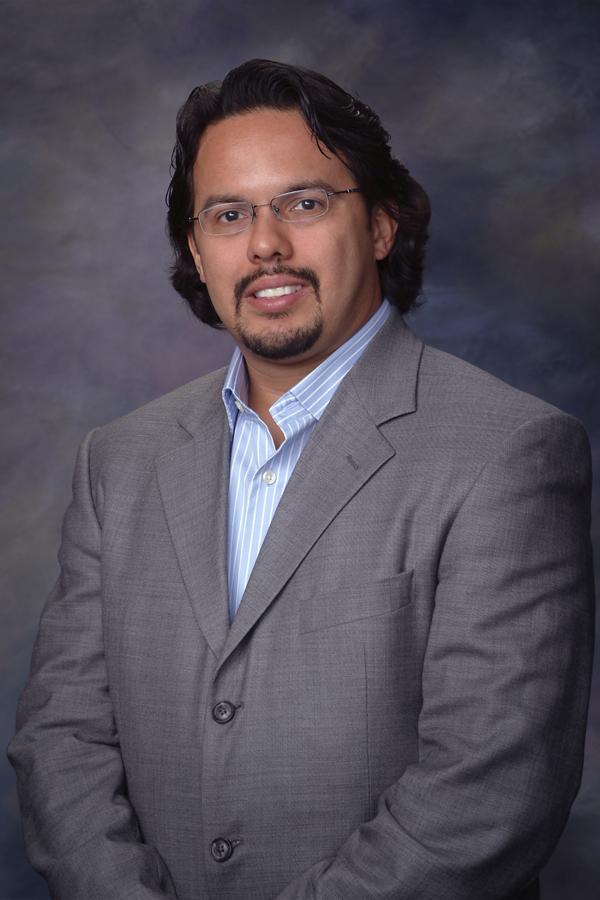
By Contributor Archives

This Thing Called Theology

I’ve recently acquired this little book by the Met. John Zizioulas, Lectures in Christian Dogmatics. One of the important points made by Met. Zizioulas is that (Orthodox) theological thinking often is just a paraphrasing and restating of what has been already set out and stated by the Fathers. In his words, 

It is unfortunate that much of today’s Orthodox theology is in fact nothing but history — a theologically uncommitted scholar could have done this kind of ‘theology’ just as well or even better. Although this kind of ‘theology’ claims to be faithful to the Fathers and tradition is in fact contrary to the method followed by the Fathers themselves. For the Fathers worked in constant dialogue with the intellectual trends of their time to interpret the Christian faith to the world around them. This is precisely the task of Orthodox theology in our time too. 

So, with that in mind, I’m going to begin reading through this book and discussing some small points I encounter on the way (as time permits). Met. Zizioulas begins by defining and discussing what is meant by these terms. What is Theology? How might we define it. He begins:

Theology starts in the worship of God and in the Church’s experience of communion with God. Our experience of this communion involves a whole range of relationships, so theology is not simply about a religious, moral or psychological experience, but about our whole experience of life in this communion. Theology touches on life, death and our very being, and shows how our personal identity is constituted through relationships, ans so through love and freedom. What makes man different from any other creature? Can humans be truly free? Do they want to be free? Can humans be free to love?

Theology is concerned with life and survival, and therefore with salvation. The Church articulates its theology, not simply to add to our knowledge of God or the world, but so that we may gain the life which can never be brought to an end. Christian doctrine tells us there is redemption for us and for the world, and each particular doctrine articulates some aspect of this redemption. We have to inquire how each doctrine contributes to knowledge of our salvation. Rather than isolating each doctrine, we have to set each doctrine out in the context of all other doctrines. Theology seeks a living comprehension of the Christian faith, of our place in the world and relationship with one another. It does not just want to preserve the statements of the Church as they were originally made, but also to provide the best contemporary expression of the teaching of the Church.

Well, that is quite a bit to chew on. What might be offered to start. One thing might be said right off. He goes on in the following to define what he means by doctrine and dogmas. On reflection this begins not so much by defining what theology is, but of what the process examines and consists. What questions does it address, what concerns does theology approach is what is posed here. 

50 leaders of the evangelical generation: #25 Samuel Rodriguez. Hispanic Advocate

 [I am working on a project that may become a book on the most influential evangelicals leaders of our generation, since 1976, and the impact they’ve had on the church and their times. I will introduce them briefly on this blog from time to time. Who should be on this list?]

#25. Samuel Rodriguez. Hispanic advocate 

(b. 1971)


The enormous promotional skills of Samuel Rodriguez, the self-anointed “leader of the Hispanic evangelical movement” and “America’s voice for Hispanic Christianity,” will be put to the test over the next few years as he attempts to bridge conservative evangelicals and the emerging group of evangelical Hispanics over the contentious issue of immigration reform.

President of the Hispanic Christian Leadership Council (HCLC)—earlier known as the Hispanic National Association of Evangelicals—Rodriguez wields tremendous influence as one of the leaders of a religious-ethnic religious group being courted by Republicans and Democrats. It is a role the young Assemblies of God pastor clearly relishes, and he has recently demonstrated the skills that will be necessary as a coalition builder on immigration.

Rodriguez gains influence on the right with stellar conservative Christian bona fides. He serves on the board of directors of some of America’s leading evangelical organizations, such as Gordon Conwell Theological Seminary, National Association of Evangelicals, and Christianity Today, Inc. He also serves on the advisory board of the National Campaign to Reduce Teen Pregnancy and various pro-life initiatives. In addition, he serves on the steering committee of The Freedom Federation, The Oak Initiative and the General Superintendents’ Cabinet in the Assemblies of God.

Raised in Bethlehem, Pennsylvania, by Puerto Rican parents, Rodriguez grew up in an Assemblies of God church (and now pastors one in Sacramento, California). He delivered his first sermon when he was 16 and quickly grew to be a rousing and acclaimed preacher.  ”I want to be a voice for our people,” he says.[1] His wife Eva serves as senior pastor of Christian Worship Center.[2]

Rodriguez earned his Master’s degree in educational leadership from Lehigh University and he is currently pursuing a doctoral degree in organizational management and behavior. He is serving on President Obama’s White House Task Force on Fatherhood.

His conservative voice often has a slightly different tone than his anglo-evangelical counterparts, but the substance is usually the same. On the war on terror, he said:

“Our moral imperative must drive us to advocate a foreign policy of justice. If we must take the lead on the war on terror, let us simultaneously take the lead on the war on poverty. We can be both Pro Israel and Pro the Palestinian People. Let us help Israel and the Palestinians by both eradicating the terrorist groups while simultaneously building schools, infrastructure, and providing opportunity. Let us replace fear with hope, rockets with opportunity. At the end of the day, let us understand that Islamic religious totalitarianism is the 21st Century version of Hitler’s National Socialism. What do we do with evil? Negotiate compromise, surrender or confront? The answer will determine not only the fate of Israel, but the fate of world peace for years to come.” [3]

But Rodriguez’ marquee issue is immigration, which he calls “a family issue for Hispanics.” In May 2010, Rodriquez orchestrated an unlikely coalition of conservatives that adopted a consensus statement on immigration reform. The group included Matthew Staver of Liberty Counsel, a ministry of Liberty University; Richard Land, head of the Southern Baptist Ethics and Religious Liberty Commission; and Rick Tyler, the head of Newt Gingrich’s new values-based organization.

CNN reported

 ”After securing our borders, we must allow the millions of undocumented and otherwise law-abiding persons living in our midst to come out of the shadows,” reads a recent draft of the document, which is still being finalized. “The pathway for earned legal citizenship or temporary residency should involve a program of legalization for undocumented persons in the United States. …”

 Many conservatives say illegal immigrants should be forced to return to their home countries and start the process of legally coming to the U.S. from scratch.

 Rodriguez, who heads the National Hispanic Christian Leadership Conference — which represents about 16 million Latino evangelicals in the U.S. — says he’ll soon start presenting the document to Republican leaders like Gingrich, former Alaska Gov. Sarah Palin and Florida Senate candidate Marco Rubio in hopes that they sign on.

 ”If the conservative evangelical community looks to the Republican Party and says, ‘We demand integration reform, we demand a just assimilation strategy,’ that may be the tipping point in getting substantial Republican support for comprehensive immigration reform,” Rodriguez said. [4]

Rodriquez points out that what commentators call an ”illegal immigrant” is, for Hispanic-evangelicals, beloved Uncle Carlos, a hard-working family man and deacon at the church. It’s hard to build alliances with people who want to put Uncle Carlos in jail. Rodriguez emphasizes that he’s not defending violations of the law. He is all for border control and immigration enforcement. He feels, however, that the argument has become anti-immigrant and anti-Hispanic. “I’m very disappointed. We need dialogue on why white evangelicals are so threatened by people who are so fundamentally in accord with their values.”[5]


[1] http://www.newsweek.com/id/81377


[2] http://www.nhclc.org/leader/rev-samuel-rodriguez

[3] http://newsweek.washingtonpost.com/onfaith/panelists/samuel_rodriguez/2009/01/hamas_hezbollah_and_al_qaeda_2.html

[4] http://www.cnn.com/2010/POLITICS/05/10/immigration.evangelicals/index.html

[5] http://www.christianitytoday.com/ct/2006/september/31.82.html

Things Heard: e130v1

Good morning.

  1. Watermelon affection.
  2. Memory Eternal.
  3. A question for union supporters.
  4. Employment.
  5. Inception reviewed from another point-of-view.
  6. Medical tech and self-empowerment.
  7. Emergent behavior.
  8. A typical response.
  9. A book reviewed.
  10. A blogger and jail.
  11. A big list of upcoming books.

[I am working on a project that may become a book on the most influential evangelicals leaders of our generation, since 1976, and the impact they’ve had on the church and their times. I will introduce them briefly on this blog from time to time. Who should be on this list?]

#41.  Nancy S. DeMoss. Philanthropist  b.1938 

While evangelical leaders recognize that God’s will and blessing are the most important ingredients of successful Christian work, it should be no surprise that funding is a vital lubricant for successful ministries. The primary sources of this funding are the individual donors who provide relatively small but regular gifts—“tithes and offerings”—to local churches and to national and international ministries.

However, large ministries must also receive major gifts from individual donors and foundations focusing on Christian ministry.  The largest U.S. group providing money to evangelical causes is the Arthur S. DeMoss Foundation, a family foundation led during the last 30 years by its matriarch, Mrs. Nancy DeMoss. The foundation was begun by her late husband, Arthur S. DeMoss, an insurance innovator and highly respected Christian businessman. Art DeMoss founded National Liberty Corporation, the pioneer of direct response insurance marketing (whose advertising featured Art Linkletter) and then began the foundation before his untimely death in 1979.

His oldest daughter Nancy Leigh DeMoss said her father was “a living illustration of the principles he taught us,” showing his seven children to put God first in everything by giving the first hour of his own day to the Word and prayer—every day for 28 years. He taught his children to be generous givers through his own goal of giving away an extravagant sum of money during his lifetime.”[1]

 His wife Nancy has guaranteed that Art DeMoss’ goal became reality, as she has guided the foundation—with a strong hand–in its extravagant giving to Christian and conservative causes over the last three decades. 

The DeMoss family, like many families of means who give away large amounts of their treasure, is mostly private to reduce badgering by grant-seekers and for family safety. But since all foundation giving records are public, the generosity of the family cannot be hidden. Also, the foundation has sponsored some very public programs, and several  family members—although not Mrs. DeMoss–have been quite visible.  ”The Foundation has a history of not seeking publicity. Foundation grantees sign a confidentiality agreement so strict that they will not even discuss the group to praise it.”[2]

Although media coverage of evangelicals, such as Time’s 2005 cover story on 25 influencers, usually focused on political action and hot-button issues such as abortion and same-sex marriage, in reality most evangelical attention goes to the spiritual priorities of the church, such as evangelism, Christian growth, and care for the poor and suffering.

This emphasis is reflected in giving within evangelicalism and is typified by the DeMoss Foundation. Records show that DeMoss provides gifts of some $21 million a year, largely support of evangelistic efforts in this country and around the world, with the top recipients including Campus Crusade for Christ, Prison Fellowship Ministries, and Liberty University. 

The foundation has also conducted some high-profile projects of its own, such as Power For Living, which has as its objective to acquaint as many people as possible throughout the world with information on how to get right with God. This is done through a multi-media campaign promoting the free book, Power For Living. The project has shifted overseas, but in the early 1990s it was quite visible in some major U.S. markets, with the foundation reportedly spending “more than $27.8 million–a sum outpacing [at the time] the media buy of a presidential campaign. [3]

Among its visible projects over the years was the 1992 ad campaign with the slogan “Life, What A Beautiful Choice,” one of the most effective and tasteful pro-life campaigns ever created. On his radio program, BreakPoint, Chuck Colson said at the time:

“The DeMoss commercials are an excellent model of how to win hearts. In a gentle, engaging style, they nudge people to reconsider how to respond to a problem pregnancy. It holds people up as admirable if they carry their babies to term. It reminds the audience that there are millions of couples ready to offer a loving home for those babies. The De Moss Foundation’s decision to air these commercials during prime time is brilliant. Right during thirtysomething, no less, when the audience consists of just those middle-class, single women most likely to abort.”[4]

Another high-profile ministry heavily supported by DeMoss is a Campus Crusade program called Executive Ministries, an evangelistic outreach targeting business and professional executives. The points of contact are luncheons and dinner parties featuring prominent Christian speakers, with these events often conducted at Mrs. DeMoss’ Palm Beach mansion, or at a facility in New York City called the DeMoss House. 

Three of the DeMoss children have been in the public eye.

  •  Nancy Leigh DeMoss, a best-selling author and popular speaker, has served on the staff of Life Action Ministries, a revival ministry based in Niles, Michigan, since 1980.
  •  Mark DeMoss heads the nation’s largest public relations firm serving Christian organizations and causes and is the author of The Little Red Book Of Wisdom , a book of principles for personal and professional fulfillment. (Note: I was a vice president at The DeMoss Group in the late 1990s).
  • Deborah DeMoss was a  forceful and sometimes controversial aide to Sen. Jesse Helms (R-N.C.), championing Nicaragua’s contra rebels and advising conservative politicians in El Salvador and throughout the region (where she married and still lives).

Although liberal stalwarts like to criticize Mrs. DeMoss and the foundation for their support of conservative politicians and causes, most who know of her work sense the heartbeat of evangelism. Eastern College sociology professor and author Tony Campolo said:

 ”Their purpose is to propagate the evangelical commitments, and that includes the social values associated with those commitments. But what they are really about is old-time religion, endeavoring to see that every person in the world comes to know Jesus.”


[1] http://library.generousgiving.org/page.asp?sec=8&page=579

[2] http://www.time.com/time/magazine/article/0,9171,28859,00.html#ixzz0sWuxxSmB

[3]  http://www.time.com/time/magazine/article/0,9171,28859,00.html#ixzz0sWuxxSmB

[4] https://www.colsoncenter.org/bpcommentaries/breakpoint-commentaries-search/entry/13/10200

Things Heard: e129v5

Good morning.

  1. East and West.
  2. On the “unconditional engagement” strategy.
  3. Why? I guess it’s part of the hope/change thing.
  4. Tax cuts and revenue.
  5. On those payday loan services.
  6. Missing the moral of the story … the moral isn’t about immigration it’s about inculcating dependency on congress-critters.
  7. Holder defends a rapist … hmm, nobody out there is connecting this with the Admin paying back Hollywood for their money and support. More here.
  8. Yah, and if not, he’ll be kicking some butt (for all the good it did and would do).
  9. More like unbelievably irrelevant.
  10. For the panic stricken.
  11. Watermelons in Bulgaria.

Safety, Growth, and Virtue.

Regarding my “brief points” post the other night, I had this comment, 

Not quite following your safety net thoughts. Are you saying that Europe innovations more than the US and that’s because the US has a bigger safety net? I’m not really seeing how that is. Or are you saying that the US has a smaller safety net and innovates more than Europe?

I think we should differentiate between types of safety nets. Compare unemployment in the US with labor’s relative dominance in Europe. In the US you get fired you get to collect unemployment (usually). In Europe its very hard to get fired. I would argue that the latter type of safety net probably squashes more innovation since once you get a job you’re quite comfortable and businesses don’t want to risk giving someone a job unless they are 100% sure about him. Likewise businesses seek to secure their markets in order to provide for secure employment. Market upstarts and disrupters are hardly welcome in this type of social arrangement.

There are indeed (at least) two types ‘types’ of safety nets at work. One involves companies and employment and the other involves personal safety nets. The EU allows more of both, that is it is harder for companies to fail and for individuals to lose their jobs and at the same time social personal safety nets are much more prevalent, e.g., unemployment, social security, and health care. 

There are two points to be made here. One is that in the US as compared to the EU social and cultural differences that encourage the lessening of corporate safety nets are the same impulses that minimize the personal nets as well. The second point to be mad is that the greater levels of productivity and innovation in the US as compared to the EU is supported by the shallower safety nets. The underlying lesson for those (primarily on the left) who keep pushing to increase our personal and corporate safety nets are trying to sail the strait between Scylla and Charybdis. Scylla being the risk (or inevitability) of lower productivity and Charybdis would be the gamble that promises made cannot be sustained by future productivity and growth. The EU has alas it seems run into both. In the following we will concentrate on the arguments and logic over the second, the personal safety net. The argument of why the two nets are connected is implicitly contained in the argument for why a lack of safety net leads to higher productivity. 

In graduate school the advisor of a friend of mine once remarked when asked what makes a good experimentalist, “The trick is not avoiding mistakes, but making your mistakes quickly.” The point being is that innovation in the US is less due to some amazing ability of Americans to innovate but instead that banks don’t keep failing businesses afloat and that companies are don’t keep making the mistake of continuing employment of poor employees as willingly. Yet that doesn’t explain another datum. In Fault Lines, Mr Rajan points out that while the EU and the US publish roughly the same number of academic papers, those published in the US are cited far much more. The academic environments are quite similar, but the individuals in those academic environments are by and large products of their respective cultures. 

Consider two very different indigenous cultures from different environments and the individuals which are products of the same as an illustrative example. Consider those people who are products of a tropical Tahitian paradise and those who are dwell above the arctic circle. Those individuals from an arctic environment must spend a good deal of effort at sustaining subsistence. Diligence, care, and attention to small environmental details are required to acquire food and avoid inclement weather. Conversely little effort is required in a tropical paradise to obtain the minimum required for sustenance. If one were to suggest some metric for measuring diligence, industry, and the ability to endure hardships. Let’s call this measure, as a leading phrase, “virtue”. Then plot our measure of (this) virtue the two societies there might be no (or at best very minimal) overlap. That is to say, the most industrious paradise dweller likely has less virtue than the least virtuous arctic representative. Personal virtue is in a large part a product of environment. 

If this argument doesn’t convince, consider the English succession (and I’d be willing to bet that this is mirrored in the history of ruling families in nations and regions that I don’t know as intimately). Time after time, a king (a “good king”) would rise to power, such as a Henry II. Raised in a school of hard knocks he was a tough and effective ruler. His children had “all the advantages”, which as it turned out ended up to be not quite so advantageous. The point is hardships teach us. Failure is instructive and a motivator. Comfort and the absence of tests leaves one less likely to push. 

The point is that the difference in industry and productivity of the respective academic environments might perhaps be linked to a cultural requirement of a higher level of the same virtue noted above in the US because of its smaller personal safety net. 

The Intimidation Factor (or lack thereof)

If Tea Partiers think the NAACP condemning the Tea Party as racist is, essentially, an irrelevant action, then what do you suppose members of al Qaeda will think of President Obama condemning al Qaeda as being racist?

Things Heard: e129v4

Good morning.

  1. More about taxes and choices.
  2. An interesting article noted.
  3. More on the new law in France, prohibiting super-heroes from using masks. More here.
  4. A monastery of note in Arizona.
  5. One man’s prediction for 2012.
  6. Hobbes in the news … although I’d have to say for my part, Bertrand de Jouvenel skewered his main thesis quite well.
  7. CEA, models and a fallacy of argument.
  8. A little zoom and boom.
  9. The media has started to forget (already).
  10. Self perceptions, 1000 words.

Things Heard: e129v3

Good morning.

Prisoners (heart) Gitmo

Turns out that the prisoners in Gitmo would rather stay in Gitmo than go home.

The Obama administration would quickly send home six Algerians held at the military detention center at Guantanamo Bay, Cuba, but for one problem: The men don’t want to go. Given the choice between repatriation and incarceration, the men choose Gitmo, according to their lawyers.

He’s got what seems to be a good reason why.

The detainee had asserted that if he is returned, the Algerian government will torture him or he will be targeted by terrorist groups who will kill him if he refuses to join.

But i spite of the recent history of torture of prisoners in Algeria, the administration disagrees.

Administration officials point out that despite this history, the United States, under the Bush and Obama administrations, has already sent 10 Algerian detainees home from Guantanamo Bay, and that none has been persecuted.

"We take some care in evaluating countries for repatriation. In the case of Algeria, there is an established track record and we have given that a lot of weight," said an administration official who spoke on condition of anonymity because of the active litigation. "The Algerians have handled this pretty well: You don’t have recidivism and you don’t have torture."

You know, if we really were torturing prisoners in Gitmo, this sort of request wouldn’t be such an issue.  Algeria doesn’t torture released Gitmo detainees, and they want to stay?  Understand, we’re not talking about some guys who just showed up.

The administration has been preparing to repatriate one of the six Algerians. But lawyers for Aziz Abdul Naji, 35, who has been held at Guantanamo for more than eight years, said he is "adamantly opposed to going back."

Adamant about staying at Gitmo.  Just let that sink in.

(Hat tip: Power Line)

Things Heard: e129v2

Good morning.

  1. Of motherhood and prayer … and sighs.
  2. Big media religion and ethics portal.
  3. Bad science misrepresented. Perhaps 30x was supposed to mean 30 orders of magnitude?
  4. Finance reform defects therein.
  5. Democracy, more or less.
  6. Stimulus.
  7. Krugman and the credibility gap.
  8. ACOG and Ms Kagan sanity check.
  9. A different road suggested.
  10. Hate speech? Progressives should keep that in mind when the offer they’re “for freedom.” (Not)
  11. Mr and Ms Obama in the “do as I say, not as I do” category.
  12. Eucharist and the inner life.

Some Semi-Random Thoughts

  • It occurred to me a while ago that having noticed that Afghanistan has large reserves of untapped natural resources … that one solution to the social problem there is to let loose the dogs of greed instead of the dogs of war. That is, instead of trying namby-pamby nation building we try some old fashioned colonial exploitation. That is to say, don’t nation build and plan to leave, hire them to help us tap them resources. And make a pretty penny in the process as well.
  • The Administration and the Democrats seems determined to ignore the jobs thing. They offer another “big” financial fix package (well in advance of the return of the commission enacted to figure out the causes returns). Then when they have trouble passing the bill, decide at the 11th hour to “ask business leaders” what impact they think the bill will have. Hmm, clearly the effect on business was not very firm in their vision when they were fussing in their basements putting the bill together. They’re putting together a cap/trade bill to battle the putative effects of carbon emissions. Have they considered the impact on jobs? They’ve decided to fight to stop deep water drilling. Jobs? Nah. From the ’90s recessions started taking longer and longer to recover employment rates. In the 2001 recession it took 23 months to recover after a relatively quick recover on other fronts. If that trend continues … the job thing? Well, it’s likely to be sticking in the 10s for some time.
  • In Fault Lines, Mr Rajan points out that there is a connection between the more impersonal crueler business environment in the US compared the EU where business fail not infrequently, but that innovation is far more prevalent. This he links to the comparative safety nets in the states vs the EU as well. The Democrats would prefer big fat soft safety nets … forgetting there is a price. You lose the pace of  innovation that has enabled so much of the modern world. TANSTAAFL. You think those safety nets are nice and cool? There’s a price. A price many would rather not pay. 
  • In the WSJ yesterday there was a short piece which as an aside highlighted Mr Obama’s part in the 2007 McCain bi-partisan immigration bill. Mr Obama publicly supported the bill, but was instrumental in inserting pieces into the bill which killed it. It may be argued that this is good politics. It is however, fundamentally dishonest. That core dishonesty is a repeating theme with him. 


WORLD CUP FINAL(ly over)

From a Facebook friend,

Q: What do Twilight and the World Cup have in common?

A: They’re 90 minutes, nothing happens, no one scores, and if you don’t like it, it’s because you “just don’t get it”.

Fiscal "Cancer"

Not that we really needed a commission to tell us this, but Obama apparently did.

The co-chairmen of President Obama’s debt and deficit commission offered an ominous assessment of the nation’s fiscal future here Sunday, calling current budgetary trends a cancer "that will destroy the country from within" unless checked by tough action in Washington.

The two leaders — former Republican senator Alan Simpson of Wyoming and Erskine Bowles, White House chief of staff under President Bill Clinton — sought to build support for the work of the commission, whose recommendations due later this year are likely to spark a fierce debate in Congress.

They’re talking mostly about a future economic crisis, not even the current one.

Bowles said that unlike the current economic crisis, which was largely unforeseen before it hit in fall 2008, the coming fiscal calamity is staring the country in the face. "This one is as clear as a bell," he said. "This debt is like a cancer."

So where’s all the money going?

The commission leaders said that, at present, federal revenue is fully consumed by three programs: Social Security, Medicare and Medicaid. "The rest of the federal government, including fighting two wars, homeland security, education, art, culture, you name it, veterans — the whole rest of the discretionary budget is being financed by China and other countries," Simpson said.

Entitlement spending has become the federal government’s primary purpose these days, despite there not being anything in the Constitution specifying this role.  And because people feel, indeed, entitled to it, cutting always has been and always will be, extremely difficult if not politically impossible.

And remember, this is before ObamaCare. 

What’s their recommendation?

"We can’t grow our way out of this," Bowles said. "We could have decades of double-digit growth and not grow our way out of this enormous debt problem. We can’t tax our way out. . . . The reality is we’ve got to do exactly what you all do every day as governors. We’ve got to cut spending or increase revenues or do some combination of that."

Bowles pointed to steps taken recently by the new coalition government in Britain, which also faces an acute budgetary problem, as a guide to what the commission might use in its recommendations. That would mean about three-quarters of the deficit reduction would be accomplished through spending cuts, and the remainder with additional revenue.

I remember what got George Bush (the first one) essentially fired from the Presidency.  He promised, "Read my lips; no new taxes."  He then proceeded to go along with Congressional Democrats who bargained with him to raise taxes with promises of spending cuts to come later.  The taxes went up, but the spending cuts never happened.  The public blamed Bush, but they were only half right.

Democrats now control Congress (for now).  Do you really think they’ll go for such spending cuts?  Their history over the decades suggests they’ll have nothing to do with them, and they’ll run us into the ground with debt.

If Republicans win big enough in November to change the balance of power, they had better start living up to their talk of fiscal conservatism.  But if they do, will the entitled public go along with it?

Things Heard: e129v1

Good morning.

  1. Considering genre fiction … and a recommendation.
  2. Uhm, No. It’s. Not. (and it’s not all about race relations either). Go have a picnic. Take a hike. Or read the prior link.
  3. Manners and presentation.
  4. Kids and the reaper.
  5. For the Palin fans.
  6. Chicago next?
  7. Evangelism in late modernity.
  8. Prayer ropes.
  9. The Marquis.
  10. How belief looks from the outside, and a suggestion as to why.
  11. Financial reform.
 Page 108 of 241  « First  ... « 106  107  108  109  110 » ...  Last »