Archive for May, 2010

50 leaders of the evangelical generation: #11 Rick Warren. Generational bridge
[I am working on a project that may become a book on the most influential evangelicals leaders of our generation, since 1976, and the impact they’ve had on the church and their times. I will introduce them briefly on this blog from time to time. Who should be on this list?]

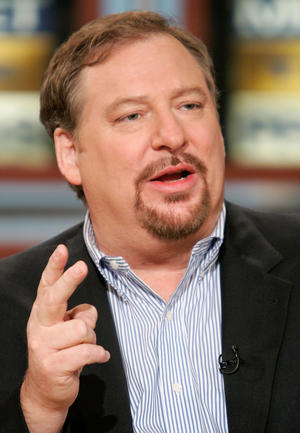
#11 Rick Warren. Generational bridge b.1954

If forced to choose, by most measures megachurch pastor and best-selling author Rick Warren is now the most influential evangelical in America. He has his evangelical critics, but most mute their criticism when he presents the Gospel in places such as Fox News Channel and prays boldly at the Presidential Inauguration.

Warren has worked to shift the evangelical movement away from an exclusive focus on traditional evangelical social issues such as abortion and same-sex marriage (regarding the latter, he called divorce a greater threat to the American family), to broader social action. Warren’s five-point plan for global action, the P.E.A.C.E. Plan , calls for church-led efforts to tackle global poverty and disease, including the spread of HIV/AIDS, and to support literacy and education efforts around the world. In February 2006, he signed a the Evangelical Climate Initiative, a controversial evangelical statement backing action to combat global warming. As the director of the ECI campaign, I saw firsthand how Warren’s signature drew media attention and provided the campaign with a gravitas that it otherwise lacked, making it impossible to ignore. In this and numerous other efforts Warren has been parting ways with other conservative, high-profile evangelical leaders.

Warren’s softer tone on political issues central to U.S. evangelicals and his concern for issues more commonly associated with the political left have resulted in the characterization of Warren as one of a “new breed of evangelical leaders.” But it has also been misunderstood by much of media as indicating a shift in the position of the “new breed” on traditional evangelical issues.

Warren has been married to Elizabeth K. Warren (Kay) for 31 years in 2010. They have three adult children (Amy, Josh, and Matthew) and four grandchildren. He considers Billy Graham, Peter Drucker, and his own father to be among his mentors. Due to enormous international book sales, in 2005 Warren returned his 25 years of salary to the church and discontinued taking a salary. He says he and his wife became “reverse “tithers,” giving away 90 percent of their income and living off 10 percent.

Warren is the founder and senior pastor of Saddleback Church in Lake Forest, California, currently the eighth-largest church in the United States. He is also a bestselling author of many Christian books, including his guide to church ministry and evangelism, The Purpose Driven Church, which has spawned a series of conferences on Christian ministry and evangelism. He is perhaps best known for the subsequent devotional, The Purpose Driven Life, which has sold over 30 million copies, making Warren one of the bestselling authors of all time.

Warren holds conservative theological views and traditional orthodox positions on social issues such as abortion, same-sex marriage, and stem-cell research. What distinguishes his public voice is his call on churches worldwide to also focus their efforts on fighting poverty and disease, expanding educational opportunities for the marginalized, and caring for the environment. During the 2008 United States presidential election, Warren hosted the Civil Forum on The Presidency at his church with both presidential candidates, John McCain and Barack Obama. Obama later sparked controversy when he asked Warren to give the invocation at the presidential inauguration in January 2009.

Warren’s chief contribution has been the forging of a new tone and a broader set of issues from the prominent position he earned through historic book sales, while maintaining strong and clear evangelical positions on major public issues and on spiritual priorities. Through these efforts, Warren may represent a bridge between the leaders who began ministry in the 1950’s and the young evangelicals yearning for a break from the more strident voice of recent leaders.

Political Cartoon: Cozy

From Chuck Asay (click for a larger version):

Chuck Asay cartoon

A bit of selective outrage.

Things Heard: e119v5

Good morning.

  1. I agree with Honda.
  2. Lean medicine.
  3. Morocco.
  4. Sniffing packets.
  5. Kagan arguing that it’s important to start from your conclusion and derive a solid argument afterwards.
  6. Phil and Paul.
  7. A parable.
  8. A day in the life of a cab driver?
  9. States and education
  10. Perfectly ‘armless.
  11. Mum? Sounds like an admission to me.
  12. Pragmatic? I think that means without principles these days.
  13. Doubting consequences. I concur.
  14. Cinema.
  15. For draw Muhammad day, Muslims drawing their founder.

A SCOTUS Ruling Question

So, minors can’t be given a life sentence. A kid under 18 commits a completely heinous and extensive serious of assaults and he’s by law now going to be out again at some point? Do you think that’s a good idea?  He just has to “not kill” his victims, say he “just” rapes girls and amputates their arms and legs. Still think he shouldn’t get a life sentence? Is that a useful or meaningful restriction? 

Church in the Making: Valuable for ministry leaders, not just church planters

I’ve been handling publicity for a new book about church planting that I think should be of interest not only to those seeking to and thinking about planting a church, but also to anyone hoping to start something new to advance Christian mission.

Church in the Making by Ben Arment doesn’t mince any words, and it has the tone of a soldier who has fought the good fight and won, but at a high personal cost, with the sense that the battles could have been easier with better intelligence, and mourning the soldier-friends who he has seen fall around him.

I’ve never tried to start a church, but I knew even before reading this book that it is extremely difficult, with a high rate of failure. Arment demonstrates a passion for saving future church planters from heartache and failure; but in the process he writes some things that will undoubtedly rub church planting traditionalists the wrong way.

For instance, Arment writes:

“We have placed a dangerous label on church planting that puts tremendous pressure on planters to persevere through any and all difficulties. We call it faithfulness. But in many cases it should really be called stupidity.”

If you have plans to plant a new church, open a new campus, or help someone who is, you need to get and read Church in the Making. It is well written and an easy read. It’s worth your time.

But it is also valuable to people like me who are involved in starting and advancing Christian organizations, missions, and causes. I’ve seen a lot of the same mistakes that Ben describes in ministry start-ups of all kinds; and I’ve made a number of the mistakes myself. I wish I would have had Church in the Making to read several years ago.

I’ve marked nine different principles in the book that I’ve seen ignored by too many ministry leaders (myself included).

1. Plant in Fertile Soil

Arment: “Every community has an established degree of spiritual receptivity. When you plant a church on fertile soil, it springs to life out of the community’s readiness. When you plant a church on infertile soil, it chokes and gasps to survive. In this case, you have to stop planting and start cultivating.” (page 3)

2. Experience Produces Humility

Arment: “You can always tell a new, inexperienced church planter because he’s the only one who thinks he knows what he’s doing. The veterans show a humility that can only come from experience. It takes a year or two to knock the self-reliance out of the new guys.” (page 10)

3. A Dream and Hard Work are Not Enough
Arment: “Church planters are notorious for thinking that a great dream plus hard work equals a thriving church. But church planters fail all the time with this formula and have not idea why.” (page 46)

4. Build a Network First

Arment: “I’m convinced that when God calls a planter to start a church, he calls him either to start a social network first (which can take years) or simply to leverage the one he’s been building around him.” (page 81)

5. You Can’t Do It Alone

Arment: “When God creates a church in the making, he doesn’t just call one person to start it. He calls a whole network of people who have been growing pregnant with vision.” (page 137)

6. Properly Channeled Frustration is Good

Arment: “God uses frustration to shape a vision. This is what he did to Nehemiah. And this is what he did to me. If God doesn’t build up a tremendous amount of frustration within us, we’ll never have the passion to pursue his calling.” (page 158)

7. Don’t Let Cash be King

Arment: “The only thing worse than not pursuing your God-given vision is compromising your God-given vision for the sake of cash flow. Don’t let money do this to you.” (page 162)

8. Put a Good Staff to Work

Arment: “Senior pastors are notorious for under-estimating the potential of their staff, mostly because they overestimate their own potential. Creating systems in your church is a far better way to leave a legacy than building up yourself.” (page 191)

9. Many Tomorrows Do Not Include You

Arment: “The fruit of the gospel comes from building a church that can exist without you and beyond you. (page 193)

Grab this book. If you are in ministry work, whether or not you are a church planter, it’s likely there’s something in it that will shake your ministry world.

[See these reviews of Church in the Making at ChurchMarketingSucks, In My Head, and from Neil Tullos.]

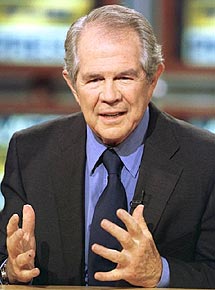
50 leaders of the evangelical generation. #9 Pat Robertson. Waves and airwaves

[I am working on a project that may become a book on the most influential evangelicals leaders of our generation, since 1976, and the impact they’ve had on the church and their times. I will introduce them briefly on this blog from time to time. Who should be on this list?]

#9 Pat Robertson. Waves and Airwaves b. 1930

Pat Robertson has always been full of surprises. Sometimes his surprise declarations play fairly well on the public stage: such as when he shocked the political establishment by not only running for president in 1988, but also placing second in the Republican primary in Iowa, which a decade earlier had been established as a viable first step for unlikely candidates when Jimmy Carter prevailed on its snow lined plains. Often his comments bring not acclaim but outrage, or at least as laugh lines on the late night shows. Sometimes his comments are careless and callous—such as his comments about Haiti’s pact with the devil, when tens of thousands of Haitians lay dead under earthquake rubble. At other times widespread mockery of Robertson is the result of broad exposure to earnest and widely accepted charismatic expression.

Like many other Christian leaders who brought faith to the nation’s largest stages during this generation, Robertson is a man of remarkable intellect and accomplishment. He built one of the nation’s largest media enterprises, and found personal fame and fortune as a result of his prowess.

“Pat” was born Marion Gordon Robertson to U.S. Senator A. Willis Robertson, a conservative Democrat from Virginia, and Gladys Churchill Robertson, a Southern belle and midlife convert to Christ. It was his mother who prodded and prayed for her son’s spiritual journey and she was instrumental in his conversion. He was raised as a Southern Baptist and later shifted to the charismatic movement.

While Robertson’s first and most significant corporate founding was the Christian Broadcasting Network (CBN), he also founded the American Center for Law and Justice (ACLJ), the Christian Coalition, Flying Hospital, International Family Entertainment Inc., Operation Blessing International Relief and Development Corporation, and Regent University. He has remained the host of The 700 Club since its founding (except for the several months when he stepped away to run for president).

His media and financial resources make him a recognized and influential voice for conservative Christianity. At the same time, the carelessness of some public statements have undercut his credibility and damaged the attractiveness internationally of the very faith he has sought to propagate.

After Robertson called for Hugo Chavez’s assassination, syndicated conservative talk show host Neal Boortz said to his evangelical listeners: “Do you realize how much damage Pat Robertson has done to evangelical influence in this country?” As Boortz pointed out, untoward statements by Robertson have not only been damaging on their face, but they have also provided ammunition to the opponents and critics of evangelicalism, including many media representatives.

Other controversies surrounding Robertson include his claim that some denominations harbor the spirit of the Antichrist and his widely misunderstood claims of having the power to deflect hurricanes through prayer. Using his broadcast pulpit, Robertson has also denounced Hinduism as “demonic” and Islam as “Satanic,” and called Israeli prime minister Ariel Sharon’s health crisis an act of God.

The week of September 11, 2001, Robertson discussed the terror attacks with Jerry Falwell, who said that “the ACLU has to take a lot of blame for this” in addition to “the pagans, and the abortionists, and the feminists, and the gays, and the lesbians [who have] helped [the terror attacks of September 11] happen.” Robertson replied, “I totally concur.” While Robertson and Falwell later issued apologies for their statements, the damage was done—particularly to Falwell‘s reputation and influence.

Less than two weeks after Hurricane Katrina killed 1,836 people, Pat Robertson again ventured to map out a divine hand, saying on The 700 Club that Hurricane Katrina was God’s punishment in response to America’s abortion policy. He also suggested that September 11 and the disaster in New Orleans “could… be connected in some way.”

Certainly, Robertson’s career cannot be characterized as a series of gaffes and misstatements. He is one of the most accomplished evangelicals of our time, and his multi-faceted empire has produced great good—often because of his drive and sometimes in-spite of it. CBN produces television programming in 80 languages to over 200 countries, and his Operation Blessing is the seventh largest private relief and development group in the world.

As one supporter, musician Charlie Daniels, said:

“Pat’s Operation Blessing plane is flown to back country third world locations loaded with doctors, dentists and other medical personnel who volunteer their time to bring free medical treatment to people who could never otherwise afford it. Imagine a child born with cleft palates and other disfiguring disabilities being shunned and teased for something they had absolutely no control over and no hope of ever having repaired. Then one day a big airplane lands with doctors who take them in and make them look normal. Or suppose you live in a village where you have to walk miles just to get a bucket of water and one day a crew shows up and with a drilling rig and drills a well right there in your village supplying the whole village with clean fresh water. Or suppose you’re hungry and someone feeds you or need clothes and somebody gives you some. Pat’s greatest accomplishment is all the lost souls he has helped find the salvation of Jesus Christ. He is a good man who serves his fellow man in a loving Christian way and some of his critics could learn some eternal lessons from him.”

Franklin Graham said at Robertson’s 80th birthday celebration: “I want to thank you for the integrity that you have brought to ministry, the standards that you have set of excellence.”

Things Heard: e119v4

Good morning.

  1. Spectacle and Art.
  2. The cross.
  3. Conservatism.
  4. And why do pundits so lack a clue? The tea party popularism is not a GOP movement, duh.
  5. The new theologian.
  6. Heh.
  7. Econ links.
  8. Our dysfunctional Senate.
  9. A site devoted to slamming the Grey Lady, defends it.
  10. Dissident or not?

A Democratic Victory

It has been noted on the left that it is counted as a political victory in taking Mr Murtha’s vacated seat, e.g., here. The right has noted that this victory in a state with a hotly contested Democratic primary and no such race on the other side with the winning candidate being a Democrat who campaigned taking a hard line against Obamacare, against abortion, and for gun rights. Well, if you want to call that a victory on the left, more power to y’all. If more Democrats pushed for smaller government, against abortion, and for gun rights … there’d be less obstructionism by the GOP in Congress too.

Obama Descending, Tea Party Ascending

Arlen Specter joins 3 other high-profile politicians who, having been campaigned for by President Barack Obama, lost their race.  Erick Erickson has a summary of yesterday’s primary results in which Rand Paul, who associated himself with the Tea Party, handily beat Trey Grayson. 

Jay Cost at RealClearPolitics notes, however, that as much as the current administration would like to classify it as such, this is not as simple as a general anti-incumbent movement.

But how many Republican incumbents are in severe jeopardy of losing their seat in Congress to a Democratic challenger?

I count one: Joseph Cao of New Orleans.

Meanwhile, I count more than 20 Democrats in the House and Senate who are in severe jeopardy. Lower the threshold from "severe" to "serious" jeopardy, and I count maybe four Republicans and more than 50 Democrats.

The White House is absolutely, positively correct that there is a divide between America and Washington – but what they fail to appreciate (or, more likely, they appreciate it but want to fake-out the press) is that Washington, D.C. now belongs to Barack Obama.

Cost is zeroing in on ousting an incumbent from one party with a challenger of the other.  He’s not considering situations like Bob Bennett’s, where he lost his primary bid earlier this month (a distant third) to another Tea Partier.  But even this plays into Cost’s contention.  Bennett wasn’t ousted simply because he was an incumbent.  The Tea Party is an ideological movement, and Republicans in Utah spoke loudly that they want their representatives to demonstrate conservative principles.  Reaching across the aisle, as good as that can be, should not trump principles.  The Republican Party has lost touch with its base, trying to show how much they can be just like Democrats, too.  (See the spending habits of George W. Bush and the Republican Congress for examples.) 

The election of Scott Brown and these primaries were the warm-up acts, I believe, of a rejection of Barack Obama’s policies.  The November elections will be the main event.  It’s still 6 months until then, but it appears that the ideas of the Tea Party are resonating with Americans, and they’re not showing any sign of going away.

Things Heard: e119v3

Good morning.

  1. Fiscal responsibility.
  2. Warming and reporting.
  3. Economics linkage.
  4. For the Palin fans in the crowd. This is not unrelated.
  5. Considering Death.
  6. Iron Man scriptwriters never heard of Christianity … apparently.
  7. “We have to pass it to find out what’s in it” and we begin to find out?
  8. High Energy news.
  9. Hard data for the Kagan discussion.
  10. Next comes waterboarding
  11. On Libertarian movements afoot in KY.
  12. Some awesome pole dancing.
  13. A commission reporting.
  14. The fall of the Soviet regime.

50 Leaders of the Evangelical Generation: #3 Francis Schaeffer. Philosopher


[I am working on a project that may become a book on the most influential evangelicals leaders of our generation, since 1976, and the impact they’ve had on the church and their times. I will introduce them briefly on this blog from time to time. Who should be on this list?]

#3 Francis Schaeffer. Philosopher 1912-1984

When I was a collegian, which my kids believe may have been in the early days of the republic, if you wanted to look like a serious believer you had a book by Francis Schaeffer tucked under you arm—or at least displayed prominently in your bookcase (which may have been an orange crate in your dorm room).

Schaeffer was mysterious, thought-provoking, and a little ornery, and he seemed European. Whether or not we could understand what he was writing, we loved to have the appearance that we were contemplating his deep questions.

A theologian, philosopher, and Presbyterian pastor, Schaffer is best known for his writings and the establishment of the L’Abri community in Switzerland. Opposed to theological modernism, Schaeffer advanced traditional Protestant faith and a presuppositional approach to Christian apologetics, which he believed would answer the questions of the age. Schaeffer popularized a conservative Reformed perspective and many credit him with helping to spark a return to political activism among evangelicals in the late 1970s and early 1980s, especially in relation to the issue of abortion.

Today, roughly 25 years after his death, his teachings continue in the same informal setting at The Francis A. Schaeffer Foundation in Gryon, Switzerland. It is led by one of his daughters and sons-in-law as a small-scale alternative to the original L’Abri, which is still operating in nearby Huemoz-sur-Ollon and other places in the world. On the other hand, Schaeffer’s son Frank Schaeffer has bolted from the shadow of his father, distanced himself from many of his views, and converted to the Greek Orthodox Church.

Schaeffer’s views were most fully developed in two works: the book titled A Christian Manifesto published in 1981, and a film series, Whatever Happened to the Human Race?. The name A Christian Manifesto, is intended to position its thesis as a Christian answer to The Communist Manifesto of 1848 and the Humanist Manifesto documents of 1933 and 1973. Schaeffer’s diagnosis is that the decline of Western Civilization is due to society having become increasingly pluralistic, resulting in a shift “away from a world view that was at least vaguely Christian in people’s memory … toward something completely different”. Schaeffer argued that there is a philosophical struggle between the people of God and the secular humanists.

Schaeffer has also been embraced by the modern Christian environmental movement as a conservative champion of environmental protection, citing his 1970 book Pollution and the Death of Man.

He wrote in Pollution:

“…the hippies of the 1960s did understand something. They were right in fighting the plastic culture, and the church should have been fighting it too… More than this, they were right in the fact that the plastic culture – modern man, the mechanistic worldview in university textbooks and in practice, the total threat of the machine, the establishment technology, the bourgeois upper middle class – is poor in its sensitivity to nature… As a utopian group, the counterculture understands something very real, both as to the culture as a culture, but also as to the poverty of modern man’s concept of nature and the way the machine is eating up nature on every side.”

The Big Commission Thang

Today we find the announcement that Mr Obama and the White House are launching a commission to figure out what happened in the oil spill.

I predict the same thing will happen as is occurring with the financial crash … more Democrat stupidity is what will happen. And no. I don’t expect that “if this was a GOP President and Congress” there would be any lack of GOP stupidity. But … today we have a Democratic President and Congress so they own the stupidness (which isn’t a word … stupid mess?)

What is occurring with the financial crash you ask that is evidence of Democrat stupidity in action? A commission was launched to study the causes of the financial meltdown. And the report on the findings of that commission is due in three months. Yet today and not in three months time the Democrats are rushing to put in place 1,400 pages “redefining” and restructuring how banking is done in the country … before the results of the study are out.

So here’s my prediction. That similarly there will be an exhaustive and complete restructuring of the oil industry and how it operates pushed through with great fanfare. Well in advance and like the financial package completely and obviously ignoring the results of the commission and any study launched with much fanfare.

Now the argument that the politically charged studies of this nature produce no meaningful results likely has merit. I think that argument is can find a lot of good historical backing and that later careful studies done show that those initial high stakes commissions produce results which are worse than a random stab at the cause or answer. But … if that is the case, then the news about this new commission is just yet another great big waste of taxpayer money. If we had a press corps with cojones, there’d be hard questions asked about the nature and expected effectiveness of such a commission which highlights the failures of the same in the past and pointing out essentially that “isn’t this commission just a way of pretending you’re doing something useful when you aren’t?”

It is not necessary for the beltway buffoons to be experts in oil drilling. It is in fact impossible for them to do so, they lack the time, the resources, and any incentive to do so. What would be good is for the beltway to get a clue about regulation. Regulators work when they have an personal stake and an incentive in regulating well. Oil drilling safety regulators would far better being beholden to insurers and not the platform operators. In the financial world, there is much noise about the problems with bond/security ratings companies getting their money from the bond issuers themselves. The (wrong) government solution is to have the government pay for (or in essence do) the ratings themselves. But that is just skewed in a different (and wrong) direction. It will cause bond ratings to skew for political purposes which are just as inaccurate. Inaccurate ratings are the problem. The solution of “who should” pay for the ratings is the same as the answer to the question “who most clearly depends on accurate ratings?” That is the same agent that should be paying for the ratings. In coal mines, the canaries might be said to be the ones wanting to be hiring the safety commission. In general the person or agents that have the most at stake, who depend the most keenly and sharply on regulation to get it right should be paying and funding said regulation (it should be noted that this is a quite different group from those who directly oppose the activity in question).

The Wright Reverend Rants

When Barack Obama was campaigning for President, I wondered if the views of a candidate’s pastor were fair game for scrutiny as part of looking at the complete candidate.  A commenter told me, "Absolutely."  Then candidate Obama distanced himself from that same pastor, and later cut ties with him.  (That same commenter then told me that, since the pastor wasn’t running, his views were a "distraction".  Convenient.)

Today, that same pastor is whining about how he got thrown under the bus, allegedly "literally".

The Rev. Jeremiah Wright, Barack Obama’s controversial former pastor, said in a letter obtained by The Associated Press that he is "toxic" to the Obama administration and that the president "threw me under the bus."

In his strongest language to date about the administration’s 2-year-old rift with the Chicago pastor, Wright told a group raising money for African relief that his pleas to release frozen funds for use in earthquake-ravaged Haiti would likely be ignored.

"No one in the Obama administration will respond to me, listen to me, talk to me or read anything that I write to them. I am ‘toxic’ in terms of the Obama administration," Wright wrote the president of Africa 6000 International earlier this year.

"I am ‘radioactive,’ Sir. When Obama threw me under the bus, he threw me under the bus literally!" he wrote. "Any advice that I offer is going to be taken as something to be avoided. Please understand that!"

(Hat tip: Bruce McQuain at Q&O)

I await the video showing that our President literally threw anyone under a bus before I believe the Reverend’s words in that regard.  In the meantime, his rantings serve to remind us that Obama will throw anyone, figuratively, under the bus, even after a close association of 20 years, if it will serve his purposes.  That’s the kind of guy we have as President.

Things Heard: e119v2

Good morning.

  1. Email is not private.
  2. Austrians on reserves.
  3. Puncturing Krugman on a silly claim of his.
  4. Not my daughters toys … which include some dolls, rockets, r/c planes and soldering kits. Coming up, … archery?
  5. Too big to fail, two posts of note … noted.
  6. “Released”, is bs. It’s already out.
  7. Tea party consequences?
  8. Restraint in the judiciary as a tactical error?
  9. Music for your day.
  10. Budget movement … is it for real? When or can we follow?
  11. 4 from Moscow.
  12. Orthodoxy in America as noted in the press.
  13. A study sure to roil the waters if validated.
  14. Reporting on religion and biases in the press noted.
  15. VAT.
  16. Our future.

50 Leaders of the Evangelical Generation: #12 John Stott. Evangelical Pope

[I am working on a project that may become a book on the most influential evangelicals leaders of our generation, since 1976, and the impact they’ve had on the church and their times. I will introduce them briefly on this blog from time to time. Who should be on this list?]

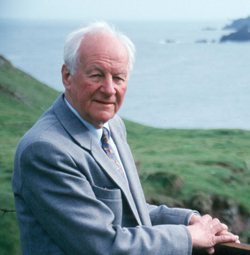
#12 John Stott. Evangelical Pope b.1921


The most beloved of evangelical pastors and theologians in the last 30 years is probably John Stott, who although an Anglican from Great Britain has nonetheless been calming influence, a source of clarity and conviction, and a convening force for evangelicals in America and the world over.

Stott has written more than 50 books, including Basic Christianity, The Cross of Christ (of which J. I. Packer says: “No other treatment of this supreme subject says so much so truly and so well.”), and Evangelical Truth.

He has traveled regularly to the United States, and his prominence within North American evangelicalism was reflected in his role as Bible expositor on six occasions at Urbana, the triennial student missions convention arranged by InterVarsity Christian Fellowship.

New York Times columnist David Brooks wrote of Stott:

“This is why so many people are so misinformed about evangelical Christians. There is a world of difference between real-life people of faith and the made-for-TV, Elmer Gantry-style blowhards who are selected to represent them. Falwell and Pat Robertson are held up as spokesmen for evangelicals, which is ridiculous. Meanwhile people like John Stott, who are actually important, get ignored.

It could be that you have never heard of John Stott. I don’t blame you. As far as I can tell, Stott has never appeared on an important American news program. A computer search suggests that Stott’s name hasn’t appeared in this newspaper since April 10, 1956, and it’s never appeared in many other important publications.

Yet, as Michael Cromartie of the Ethics and Public Policy Center notes, if evangelicals could elect a pope, Stott is the person they would likely choose.”

In the words of his biographer, Timothy Dudley-Smith:

“John Stott has provided a model for international city-centre contemporary ministry now so widely accepted that few now realize its original innovative nature.” Central in this model were five criteria: the priority of prayer, expository preaching, regular evangelism, careful follow-up of enquirers and converts, and the systematic training of helpers and leaders.

One of Stott’s major contributions to world evangelization was through the 1974 International Congress on World Evangelization held at Lausanne, Switzerland. John Stott acted as chair of the drafting committee for the Lausanne Covenant, a significant milestone in the evangelical movement. As chair of the Lausanne Theology and Education Group from 1974 to 1981, he strengthened evangelical understanding of the relation between evangelism and social action. He was again chair of the drafting committee for the Manila Manifesto, a document produced by the second International Congress in 1989.

Although known for a gentle tone and for his embrace of dialogue among varied groups of Christians and with other faiths, Stott makes it clear that he does not believe truth is plural.

As Brooks writes:

“Stott does not believe in relativizing good and evil or that all faiths are independently valid, or that truth is something humans are working toward. Instead, Truth has been revealed. Stott writes: ‘It is not because we are ultra-conservative, or obscurantist, or reactionary or the other horrid things which we are sometimes said to be. It is rather because we love Jesus Christ, and because we are determined, God helping us, to bear witness to his unique glory and absolute sufficiency. In Christ and in the biblical witness to Christ God’s revelation is complete; to add any words of our own to his finished work is derogatory to Christ.’ ”

Stott has remained celibate his entire life. He says, “The gift of singleness is more a vocation than an empowerment, although to be sure God is faithful in supporting those He calls.”

Stott has publicly considered the idea of annihilationism, which is the belief that hell is incineration into non-existence rather than eternal conscious torment (the traditional evangelical view). This has led to some criticism and some support.

Despite his formal retirement from public engagements, he is still engaged in regular writing. In January 2010, at the age of 88, he launched of what would explicitly be his final book: The Radical Disciple.

 Page 2 of 5 « 1  2  3  4  5 »